


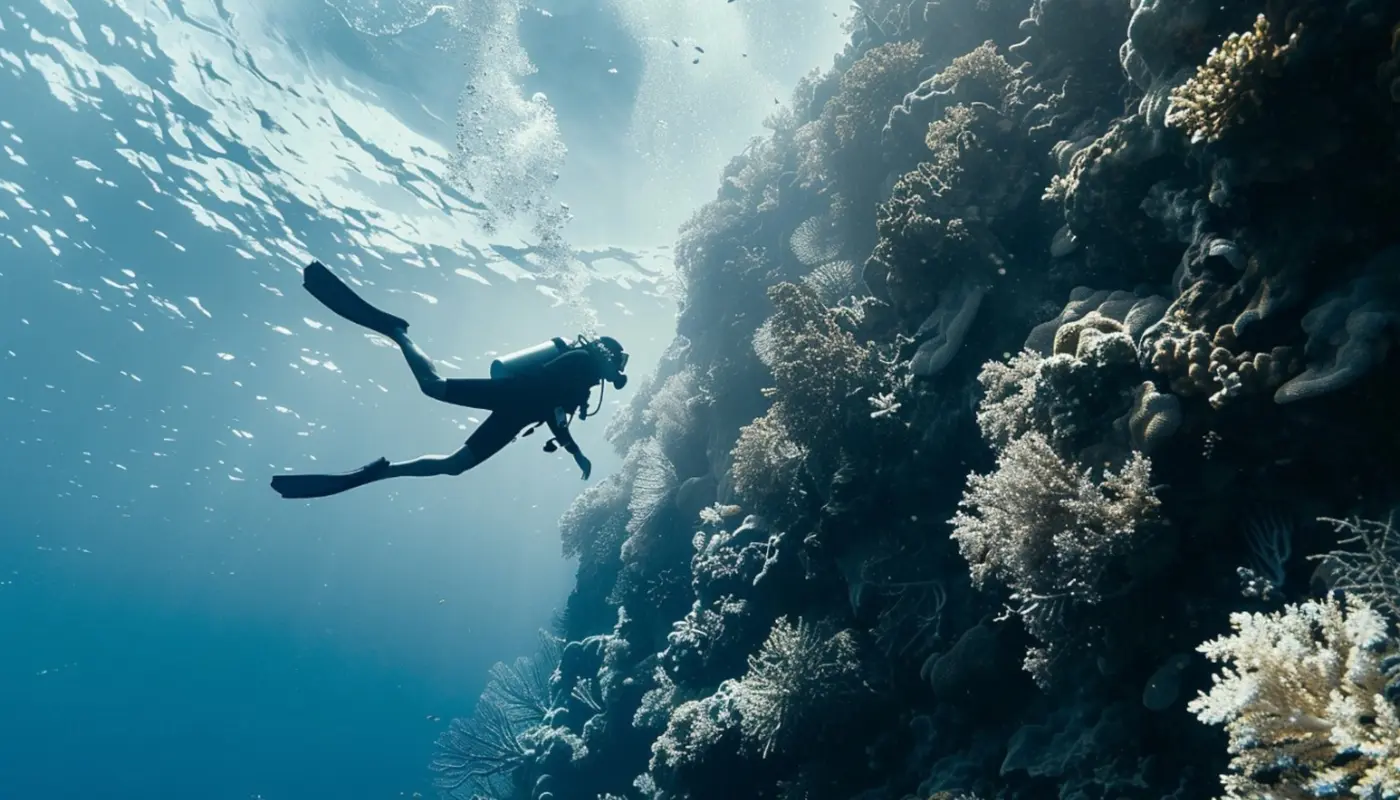
The Andaman Islands, you see from the beach is very different from what you experience once your head goes underwater.
Most travelers arrive for the beaches. White sand, blue water, photographs. That part is easy. What surprises many people is how different the islands feel below the surface. The sound disappears. The rush disappears. Even time feels slower.
Scuba diving in Andaman is not as loud or dramatic as shown in the movies. It is quiet. Controlled. Almost meditative. You descend a few meters, and suddenly there are corals shaped like brains, fans, and branches. Small fish move in groups. A turtle passes without urgency. You are the visitor there.
If you are considering diving in Andaman Islands for the first time, or planning a proper dive trip, this guide lays things out clearly — what to expect, where to go, how much it costs, when to visit, and how to choose the right team. No exaggeration. Just the practical side of it.
Why People Come Here Specifically for Diving
The Andaman archipelago sits far from mainland India. That distance matters. There is less industrial runoff, less shipping disturbance compared to busier coastal belts. As a result, water clarity can be surprisingly good during the right months.
Scuba diving in Andaman has grown steadily because:
- Coral reefs remain comparatively healthy
- Water temperatures stay warm most of the year
- Sites suit both beginners and experienced divers
- Marine life density is noticeable even in shallow areas
You do not need to go deep to see life here. Even introductory dives often show coral clusters, reef fish, and sometimes rays or turtles.
Diving in Andaman Islands does not feel like a conveyor belt operation when done with the right operator. It feels paced.
Havelock: The Main Base for Divers
Most conversations about scuba diving Havelock start with one word — consistency. Conditions here are reliable during peak season. Dive sites are accessible by short boat rides. Infrastructure is better developed than on smaller islands.
If someone searches for the best scuba diving in Havelock, they are usually directed toward sites such as:
- Nemo Reef (ideal for beginners)
- Lighthouse (deeper, suitable for advanced divers)
- The Wall
- Seduction Point
- Tribe Gate
Each site offers slightly different underwater terrain. Some are sandy with scattered coral heads. Others have sloping reef walls. Visibility shifts day to day, but during the best season for scuba diving in Andaman, it can be very clear.
When people talk about the best scuba in Havelock, they often mean more than coral. They mean patient instructors, properly maintained equipment, and small groups.
If you are planning scuba diving Havelock during peak months, it helps to book early rather than deciding on arrival. Good slots fill up quickly.
First Time Scuba Diving: What It Actually Feels Like
There is always nervousness before a first dive. Even confident swimmers hesitate when they think about breathing underwater.
For first time scuba diving, the process is structured but not rushed. You begin with a short explanation on land. Instructors show you the equipment — tank, regulator, buoyancy jacket. You practice breathing through the mouthpiece before entering the water.
You do not need to be a strong swimmer for introductory dives. An instructor stays beside you throughout. Depths are controlled. Movements are slow.
The first few minutes underwater can feel strange. Your brain needs a moment to accept that breathing is happening normally. After that adjustment, attention shifts outward. You start noticing the reef instead of your breathing.
Many people who try scuba diving in Andaman for the first time surface with a similar reaction — quiet disbelief. It does not feel extreme. It feels immersive.
Types of Diving Available
Diving in Andaman Islands is not one single activity. There are multiple formats depending on experience.
- Discover Scuba Diving: For complete beginners. No certification required. One instructor per small group.
- Fun Dives: For certified divers who want to explore local sites.
- Certification Courses: Open Water, Advanced Open Water, Rescue Diver, and Divemaster programs are available through licensed centers.
- Night Diving: For certified divers. The reef changes behavior after dark. Nocturnal species emerge.
For certified divers. The reef changes behavior after dark. Nocturnal species emerge.
Some Andaman diving packages combine accommodation and multiple dives, which helps if you are staying longer than two or three days.
If you are unsure which option fits you speak with a dive professional before booking. The right choice depends on comfort level and time available
Understanding Scuba Diving in Andaman Price
One of the most common questions revolves around scuba diving in Andaman price. Costs vary for several reasons:
- Beginner vs certified dive
- Number of dives booked
- Inclusions (photos, videos, transfers)
- Time of year
- Equipment standards
Havelock scuba diving cost is sometimes slightly higher than smaller islands because of demand and site accessibility. However, pricing should not be the only deciding factor.
When comparing scuba diving in Andaman price ask direct questions:
- Is equipment serviced regularly?
- Are instructors internationally certified?
- What is the diver-to-instructor ratio?
- Is boat transfer included?
Very low prices often mean larger groups or limited supervision. Underwater activities are not where you want shortcuts.
Best Season for Scuba Diving in Andaman
Weather patterns in the Bay of Bengal influence dive conditions.
The best season for scuba diving in Andaman generally runs from October to May. During these months:
- Sea conditions are calmer
- Rainfall is lower
- Visibility improves
- Boat operations run consistently
June to September brings monsoon weather. Some centers operate limited dives depending on daily sea conditions, but cancellations are more frequent.
If visibility matters to you, plan your scuba diving in Andaman during the drier months.
Marine Life: What You May Encounter
Diving in Andaman Islands introduces you to a mix of reef life and occasional pelagic visitors.
Common sightings include:
- Clownfish inside anemones
- Butterflyfish and angelfish
- Parrotfish grazing coral
- Moray eels
- Sea turtles
- Reef sharks (generally harmless and calm)
- Blue-spotted stingrays
During certain months, manta rays pass through deeper sites.
Marine life sightings can never be guaranteed. That unpredictability is part of diving anywhere. But Andaman waters are known for regular reef activity even on beginner dives.
Safety Considerations
Professional dive centers follow strict guidelines:
- Medical questionnaire before diving
- Equipment checks before entering water
- Controlled descent rates
- Depth limits for beginners
- Surface interval rules
If you have asthma, recent surgeries, heart conditions or sinus issues discuss openly with the dive team.
After diving, avoid flying for at least 18–24 hours. This is non-negotiable.
Choosing the best scuba in Havelock often comes down to how seriously safety is treated.
Reaching Havelock
To experience scuba diving Havelock, you first fly into Port Blair. From there:
- Government ferries (budget-friendly)
- Private catamaran ferries (faster and more comfortable)
The journey usually takes between 90 minutes to 2.5 hours.
Once on the island, transport to dive centers is straightforward.
Practical Preparation Tips
Before diving in Andaman Islands:
- Stay hydrated
- Avoid alcohol the previous night
- Sleep well
- Eat light before diving
- Carry reef-safe sunscreen
Do not pressure yourself to “go deeper.” Comfort matters more than depth.
Beyond Havelock
While scuba diving Havelock dominates searches, other locations offer dives too:
- Neil Island (Shaheed Dweep)
- North Bay
- Cinque Island (advanced divers only)
Still, most structured Andaman diving packages operate out of Havelock due to site variety and frequency.
The Mental Side of Diving
Something rarely discussed is the psychological shift underwater.
Noise disappears. You hear only bubbles and distant boat engines. Movements slow down naturally because rushing wastes air. Even people who describe themselves as restless often become calm underwater.
Scuba diving in Andaman can feel less like an adventure sport and more like a reset.
Final Reflection
Scuba diving in Andaman Islands is not about dramatic drops or extreme depth records. It is about immersion.
You float above coral. Fish move around you without panic. Sunlight filters down in shifting patterns.
When you come back to the surface, the island looks the same. But you have seen a layer of it that many visitors miss.
If you are already traveling this far, consider going a few meters deeper.
The Andaman Islands make more sense from below the surface.
About Waterwoods
At Waterwoods, we approach diving differently. We are based in Havelock, and we know these reefs through repetition, not brochures.
We keep group sizes small. We prefer clear conversations before the dive rather than rushed briefings. We believe comfort leads to better underwater experiences.
Our team works with certified professionals who understand that many guests are attempting first time scuba diving. Patience matters.
If you are comparing Havelock scuba diving cost options, we encourage you to look beyond numbers. Ask about supervision, equipment standards, and time spent underwater.
If you are planning scuba diving in Andaman and want straightforward advice, speak with us. We would rather guide you honestly than oversell anything.
Frequently Asked Questions
Which is the best place for scuba diving in Andaman Islands?
Havelock Island, now called Swaraj Dweep, is usually the first choice. The dive sites there are close, well-managed, and suitable for beginners as well as certified divers. Many experienced divers also rate Neil Island highly for quieter reefs. Still, most visitors start with Havelock because of its consistent conditions.
What is the scuba diving Havelock price for first-time divers?
For beginners, the scuba diving Havelock price generally falls within a standard range set by licensed operators on the island. It usually covers basic training, equipment, and a guided dive. The final amount depends on the season and whether photos or videos are included. It’s better to confirm inclusions before booking.
What is included in Andaman diving packages?
Most Andaman diving packages include equipment, instructor guidance, and boat transfers to the dive site. Some packages also add underwater photos, short training sessions, and pickup from your hotel. Multi-dive packages for certified divers may include two or three dives over a day or more. Always ask what is clearly covered.
What is the best season for scuba diving in Andaman?
The best season for scuba diving in Andaman is usually from October to May. During these months, the sea stays calmer and visibility underwater improves. Heavy rains between June and September can affect dive schedules. For clearer water, winter and early summer are preferred.
Is scuba diving in Andaman safe for first-time scuba diving experiences?
Yes it is considered safe when done with certified instructors and approved dive centers. Beginners are given a short briefing and stay under close supervision the entire time. Depth is limited for first-time scuba diving, and safety checks are done before entering the water. Choosing a reliable operator makes all the difference.
How long does a scuba diving session in Havelock last?
A complete session usually takes about two to three hours including briefing and preparation. The actual underwater time often ranges between 20 to 45 minutes. Certified divers doing multiple dives may spend more time at sea. The duration also depends on air consumption and sea conditions.
Are there affordable scuba diving packages in Andaman for couples or groups?
Yes, many operators offer discounted rates for couples or small groups. Booking multiple dives together often reduces the per-person cost. Some dive centers also provide custom group packages during off-peak months. Comparing options in advance helps you find a balanced deal.
Can non-swimmers try scuba diving for the first time in Andaman?
Non-swimmers are usually allowed to try introductory dives under strict supervision. The instructor remains beside you throughout the dive. You do not need advanced swimming skills for beginner experiences. However, being comfortable in water always helps you relax more easily.