

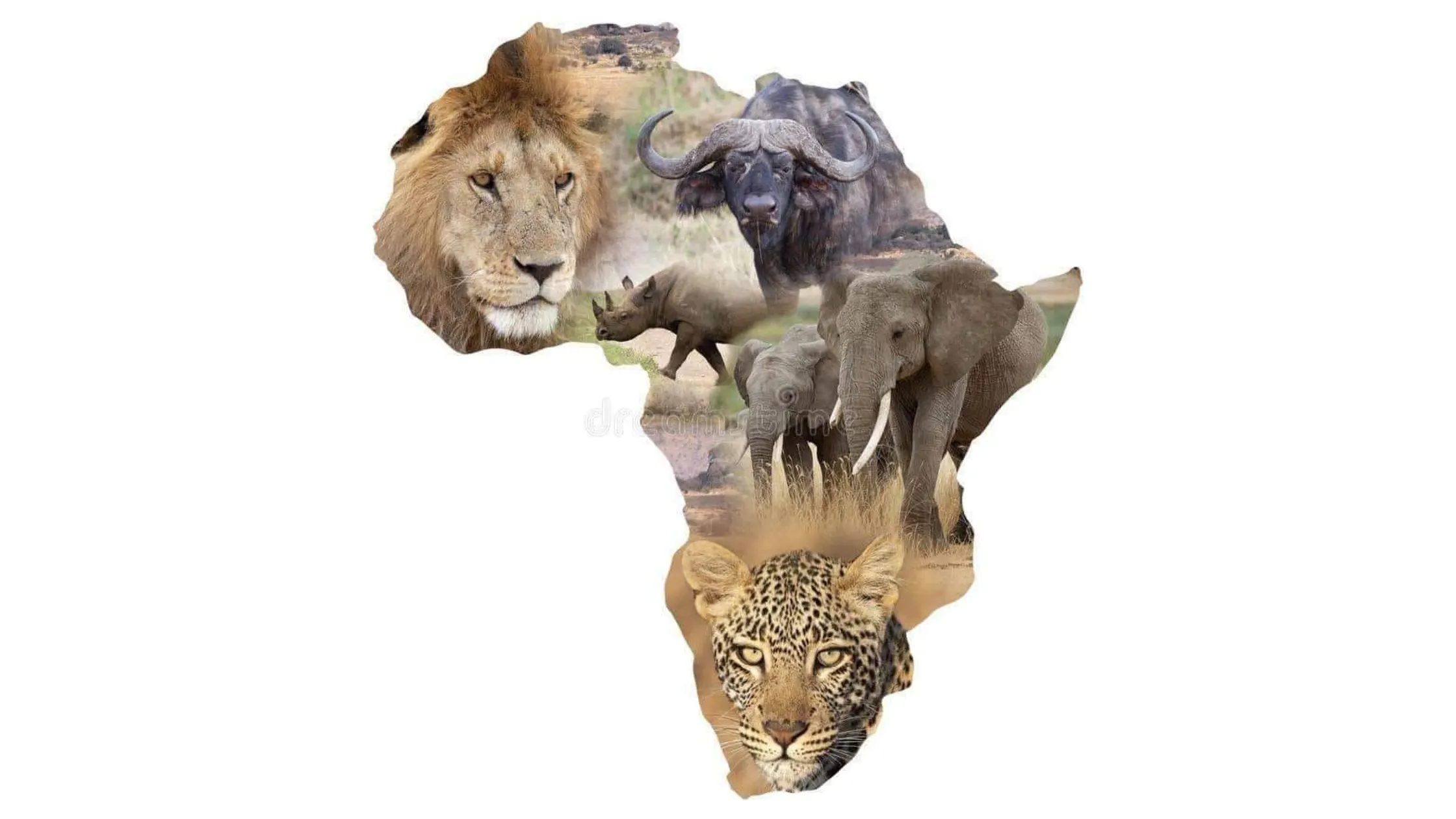
Every safari brochure on earth leans on the same five words: lion, leopard, elephant, rhino, buffalo. Say Big Five safari animals to anyone who’s ever dreamed of an African safari and they won’t ask what you mean. It’s the most successful piece of wildlife branding of the last century, and it’s done more to sell the Big Five of Africa than any tourism board campaign could.
India has never had that. No slogan, no five-animal shorthand, nothing printed on a thousand safari lodge brochures. And yet spend three days in a forest like Kabini, in the shadow of the Western Ghats, and you’ll come away wondering why not. This isn’t really an article about India copying Africa’s homework. It’s a question worth asking properly: does India’s Big Five deserve the same recognition and if it does, what would that even look like?
A Term Built on Danger, Not Size
Here’s the part most travel articles skip: the Big Five African animals were never a compliment. The phrase was coined by colonial-era hunters in the late 1800s and early 1900s, and it had nothing to do with fame, beauty, or rarity. It was a working list of the five hardest and most dangerous animals to hunt on foot across the continent. A wounded buffalo will circle back and charge. A cornered leopard fights instead of fleeing. An elephant can close twenty metres before a hunter even reloads. Bagging all five big 5 game animals was a badge of nerve, not taste.
That history is uncomfortable, and it should be. But it’s also why the term has staying power. It wasn’t built around cuteness or Instagram appeal, it was built around big 5 African animals that genuinely command the landscape, that a guide can’t fake a sighting of, that force real respect the moment they appear. When the rifles gave way to camera lenses through the twentieth century, the label didn’t disappear. It just got repurposed, and it’s been driving big 5 safari animals tourism to Kruger, the Serengeti and the Masai Mara ever since with Big 5 in South Africa parks like Kruger still marketing the concept harder than anywhere else on the continent.
That’s the real reason the Big Five Animals concept works. It isn’t a random assortment of impressive creatures. It’s a list built around difficulty, unpredictability and presence and that’s a much higher bar than “photogenic.” Ask any guide who’s spent a career tracking 5 big animals in Africa and they’ll tell you the same thing: the list earned its reputation the hard way.
So, Does India Deserve a Big Five of Its Own?
Worth saying plainly: even big 5 game in Africa was never an official classification. No government or conservation body ratified it. It caught on because hunters used it, then tour operators borrowed it, and eventually it just stuck. So if the bar for “deserving” a Big Five is official recognition, Africa wouldn’t clear it either.
Which changes the question. It’s less “has anyone declared this” and more “does the wildlife hold up.” And on that measure, India’s case is stronger than most travellers realise. This is a country that now holds roughly two-thirds of the world’s remaining wild tigers. It carries the largest population of Asian elephants left on the planet. Its leopards are a genetically distinct subspecies found nowhere else. Its forests hold the gaur, the largest wild bovine alive bigger, by weight, than the Cape buffalo it’s so often compared to. And it has an apex pack predator, the dhole, that Africa simply doesn’t have an equivalent for.
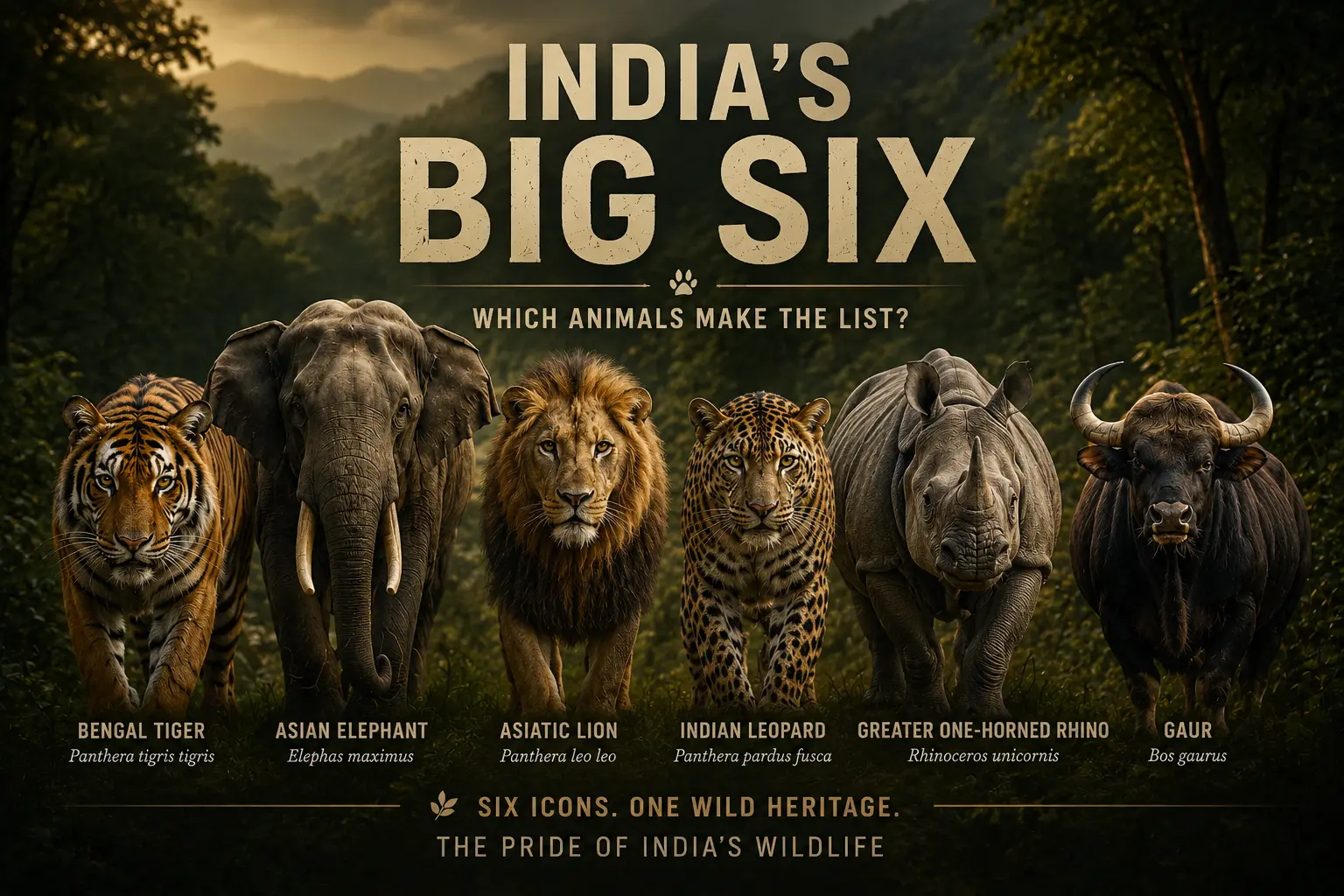
Some lists that circulate online try to build a national India’s Big Five around the tiger, elephant, leopard, Asiatic lion and one-horned rhino species that are genuinely remarkable, but that live thousands of kilometres apart, in Gujarat and Assam and nowhere near each other. Stitching them into one list makes for a good infographic. It doesn’t describe any single forest a traveller could actually visit and see all five in.
That’s the gap worth paying attention to. Not “does India have five famous animals” of course it does but “does India have a landscape where five iconic species share the same river, the same grassland, the same safari route, the way Africa’s five overlap in the Serengeti?” That’s a much harder, more honest question. And it points somewhere very specific: wildlife safari in India doesn’t get much better than Kabini.
Kabini Is Where the Case Gets Made
Kabini sits on the southeastern edge of Nagarhole National Park often referred to simply as Kabini National Park by visitors, given how closely the two are linked where the Deccan Plateau drops into the Western Ghats and the whole landscape folds into the Nilgiri Biosphere Reserve. It’s one of the first biosphere reserves declared anywhere in the country, and part of an unbroken forest corridor running through Bandipur, Wayanad and Mudumalai. Wildlife in Kabini isn’t boxed into a fenced reserve. It moves, the way it’s supposed to.
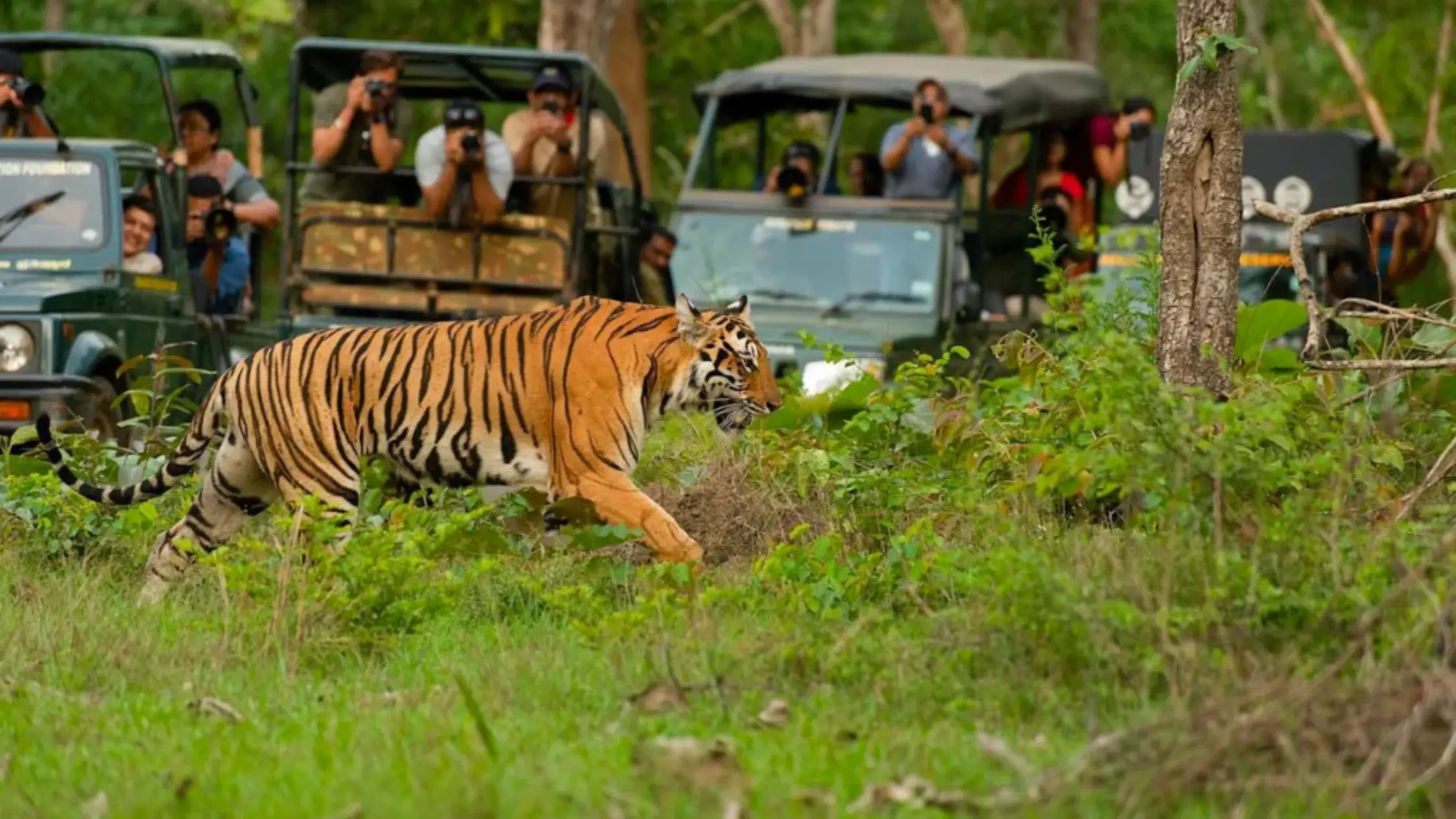
The Kabini River is what makes this forest different from most tiger reserves in India. As its backwaters recede through the dry months, they leave behind wide grassy meadows that pull animals out of dense cover and into open view closer to how a waterhole works on the African plains than anything typical of Indian jungle safaris, where sightings are usually a matter of luck and thick teak forest. Add a resilient tiger population, frequent leopard activity, packs of dhole, and a bird list that runs past 250 recorded species, and you start to understand why photographers who’ve done both continents rate Kabini wildlife among the best wildlife destination in India not just in the south.
A Kabini safari also runs through most of the year, at a time when many Indian reserves shut their core zones for the monsoon. That alone makes it one of the more planable wildlife trips in the country.
Meet the Five That Define Kabini
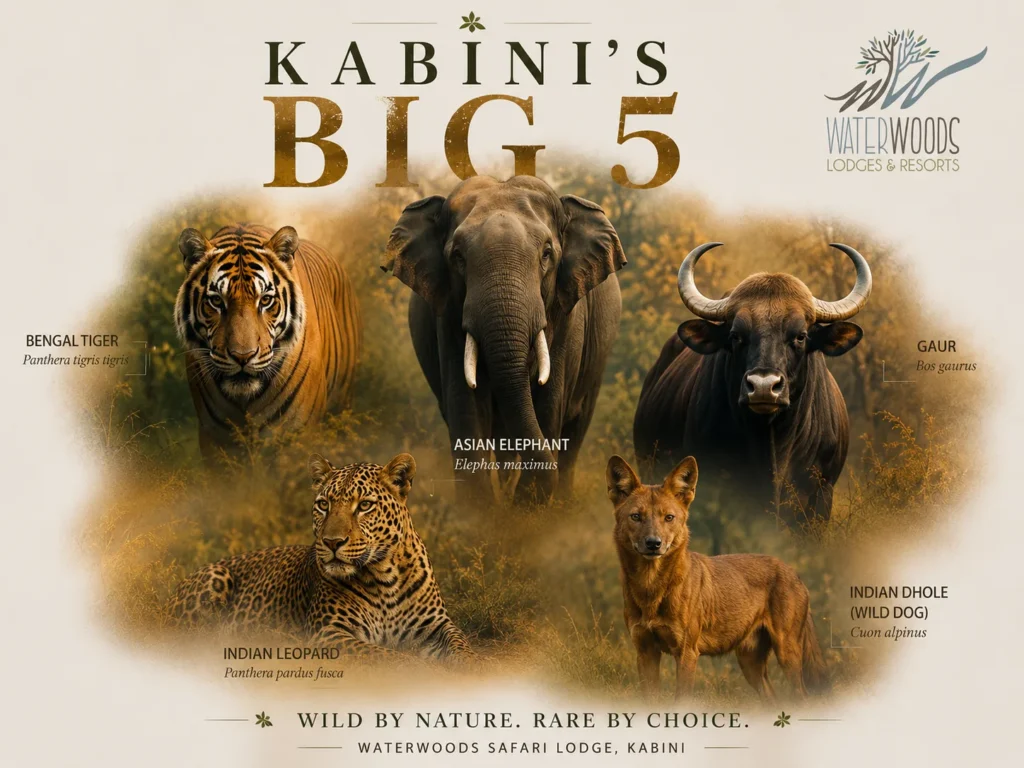
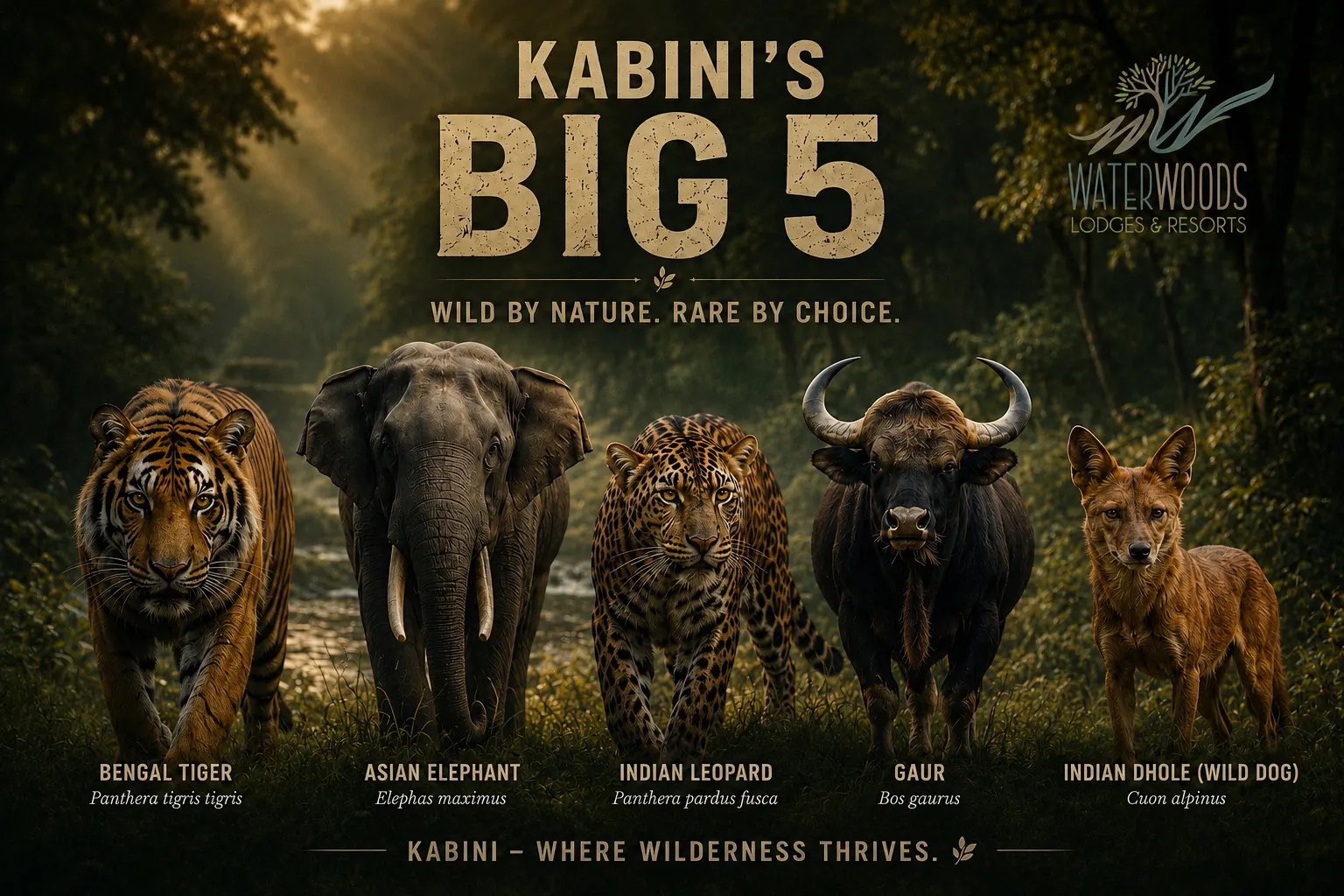
- Bengal Tiger (Panthera tigris tigris): India now holds the majority of the world’s remaining wild tigers, and Karnataka’s forests are among the strongest tiger landscapes left standing. Solitary, territorial, most active at first and last light trackers here read pugmarks in the mud and alarm calls from langurs long before the animal itself shows up.
- Asian Elephant (Elephas maximus): Karnataka carries the largest Asian elephant population of any Indian state, and a meaningful share of it leans on the Kabini backwaters during the dry season. Herds numbering in the hundreds gather here to drink and graze, which makes elephant sightings less a matter of hope and more a matter of timing.
- Indian Leopard (Panthera pardus fusca): Harder to find than the tiger, and deliberately so leopards here tend to work the forest edges to stay clear of larger predators. Solitary, nocturnal, superb climbers. Patience beats persistence; evening safaris tend to pay off more often than morning ones.
- Gaur (Bos gaurus): The world’s largest living wild cattle species, and oddly shy for something that can weigh over a tonne. Herds graze the open grassland near the backwaters in early morning and late afternoon, usually led by an older female, and retreat into cover the moment they sense a vehicle too close.
- Indian Dhole (Cuon alpinus): One of Asia’s most efficient pack hunters, and one of its most endangered canids. Kabini is considered one of the better places in the country to see them working as a coordinated pack a sight rarer than the other four, which is exactly what makes it worth chasing.
When to Go, and Why It Changes Everything
Kabini isn’t a single-season destination, and that’s part of its appeal.
- October through February brings cooler air, easier safari conditions and strong birdlife as migratory species move in.
- March through May is the dry stretch the backwaters shrink fastest here, and that’s when elephants, gaur and tigers concentrate hardest around what water is left, delivering the most consistent big-mammal sightings of the year.
- Monsoon months, when most Indian parks close outright, turn this forest a deep, saturated green fewer guaranteed sightings, but a quieter, more atmospheric jungle for those willing to trade certainty for solitude.
There’s no wrong month here. There’s only a right month for what you’re actually chasing.
Where You Stay Changes What You See
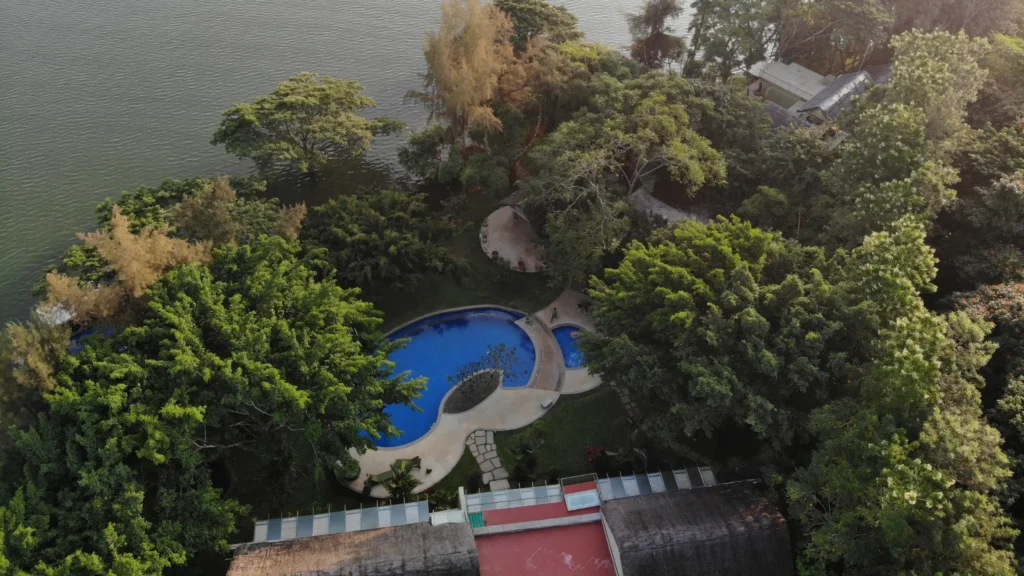
A Kabini safari trip lives or dies on how close you are to the forest, not how far you’ve travelled to reach it. Waterwoods, a riverfront wildlife resort in Kabini, sits directly on the water, close enough to the safari gates that mornings start with the jungle, not a transfer. Its remote forest villas at Swarajdeep push that further still tucked into quiet woodland where the loudest sound after dark is the forest itself, not a generator or a highway.
None of that guarantees a sighting. Nothing legitimately can. But it stacks the odds the only way that actually works: fewer hours in transit, more hours where the animals are.
The Verdict
So does India deserve its own Big Five? Not as a marketing gimmick stapled onto five unrelated species scattered across the map. But as a landscape where a tiger, an elephant, a leopard, a gaur and a pack of dhole genuinely share the same river, the same forest, the same safari route yes. Kabini already makes that case, whether or not anyone ever prints it on a brochure.
Frequently Asked Questions
Why are they called the Big Five game animals?
The name comes from colonial-era hunters, who used it in the late 1800s to describe the five African animals hardest and most dangerous to hunt on foot lion, leopard, elephant, rhino and buffalo. It was about risk, not size or fame. Safari tourism kept the name and swapped the rifle for a camera.
Is Africa's Big Five an official classification?
No. It was never ratified by any government or conservation body it caught on through hunters and later tour operators until it became industry shorthand. That informal history is worth knowing before assuming India needs “official” recognition to deserve a similar concept.
Does India have its own version of the Big Five safari animals?
Not as a single formalised national list but landscapes like Kabini come close in practice. Here, the tiger, elephant, leopard, gaur and dhole genuinely share one river valley, which is closer to how Africa’s five overlap than most comparisons manage.
Can you see tigers, elephants, leopards, gaur and wild dogs on a Kabini safari?
All five are resident species in the Nagarhole–Kabini landscape and are regularly recorded there. No single safari can promise all five no honest operator anywhere would claim that but Kabini’s backwaters make multi-species sightings more consistent than most Indian reserves.
Is Kabini better than other tiger reserves for wildlife sightings?
It depends what you’re chasing. Kabini’s backwaters give it a real edge for elephant and gaur sightings, plus the option of a boat safari few other reserves offer. Some central Indian parks post higher tiger density in certain seasons, but few combine river, forest and open grassland the way Kabini does.
What animals are most commonly spotted during a Kabini safari?
Spotted deer, langurs, sambar and elephants turn up on most safaris. Gaur sightings are frequent near the backwaters. Tiger, leopard and dhole sightings happen regularly but stay unpredictable, since all three are naturally elusive.
How does Nagarhole National Park compare with African safari destinations?
It won’t match the open-plains visibility of the Serengeti or Masai Mara the terrain here is denser, more forested. What it offers instead is a working biosphere reserve with a river system that concentrates wildlife the way an African waterhole does, inside a genuinely varied five-species landscape.
Which national park in India offers the closest experience to Africa's Big Five safari?
For species concentrated visibly around water, Kabini is arguably India’s strongest answer. Its backwaters function much like an African waterhole, pulling multiple species into open view during the dry months in a way few Indian parks replicate.