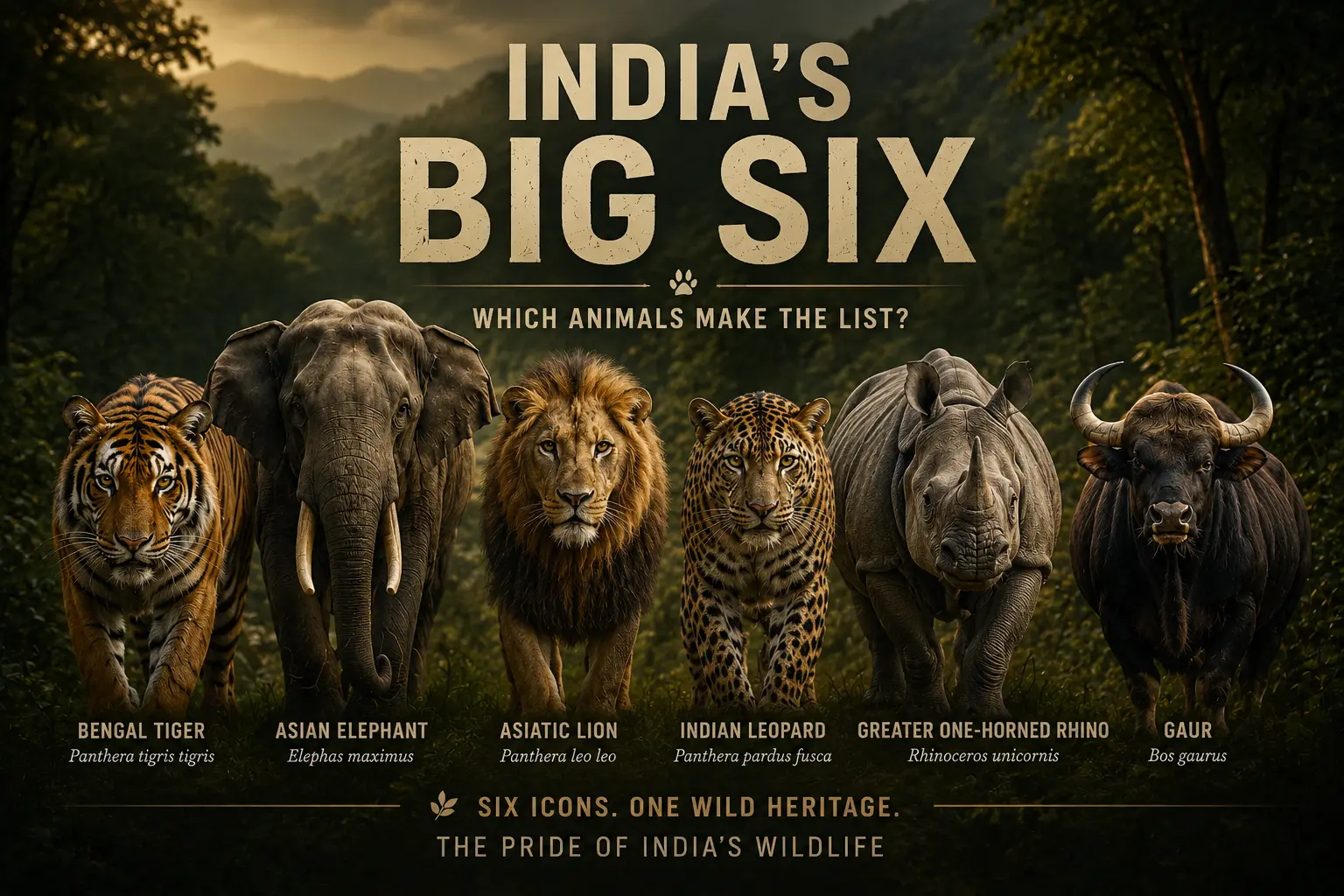


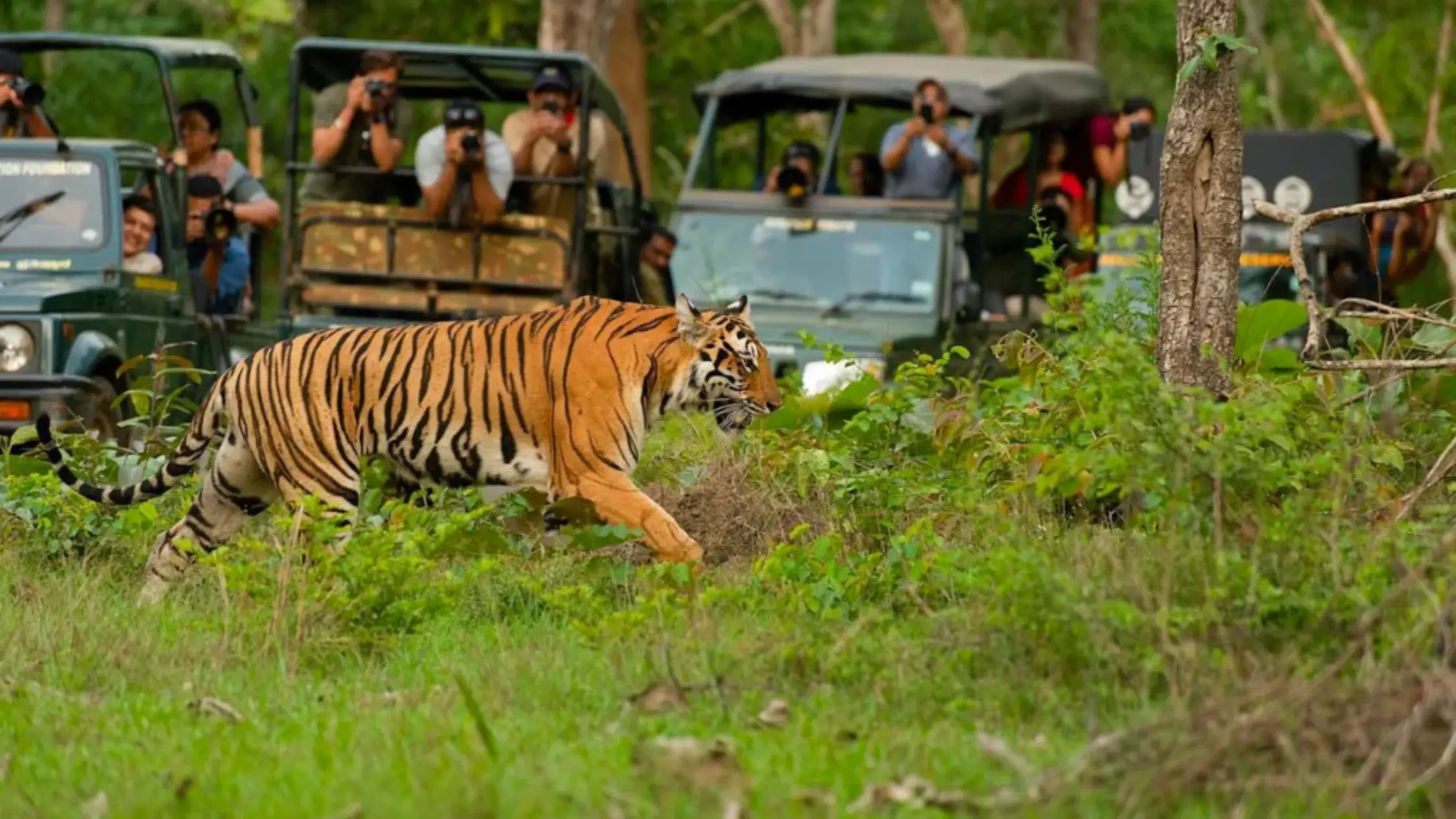
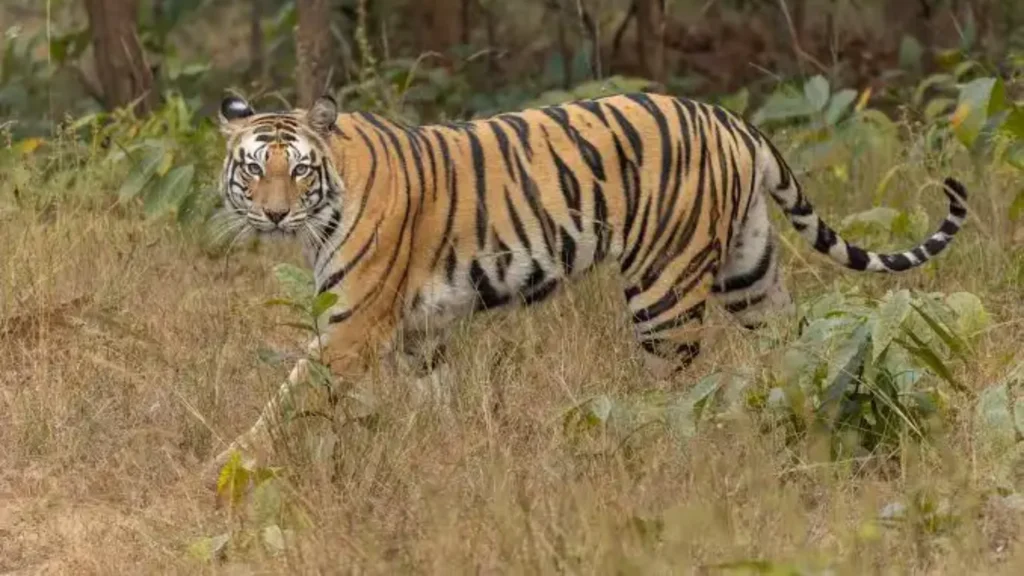
Ask most first-time visitors what they’re hoping to see in Kabini, and the answer is almost always the same word. Tiger. It’s the animal on the postcards, the one guides get asked about before the jeep has even left the gate, the reason half the vehicles on any given morning slow to a crawl at the first hint of alarm calls.
Fair enough Kabini earns that reputation. But treating a Kabini safari as a tiger hunt with a camera means missing most of what actually makes this forest remarkable. This is a landscape where an elephant herd numbering in the hundreds gathers at one bend of the river, a famously rare black leopard has made global headlines from a single tree, and over 250 recorded bird species share the same stretch of water as basking crocodiles and otter families. The tiger is one story here. It was never the only one.
The Giants at the Water's Edge
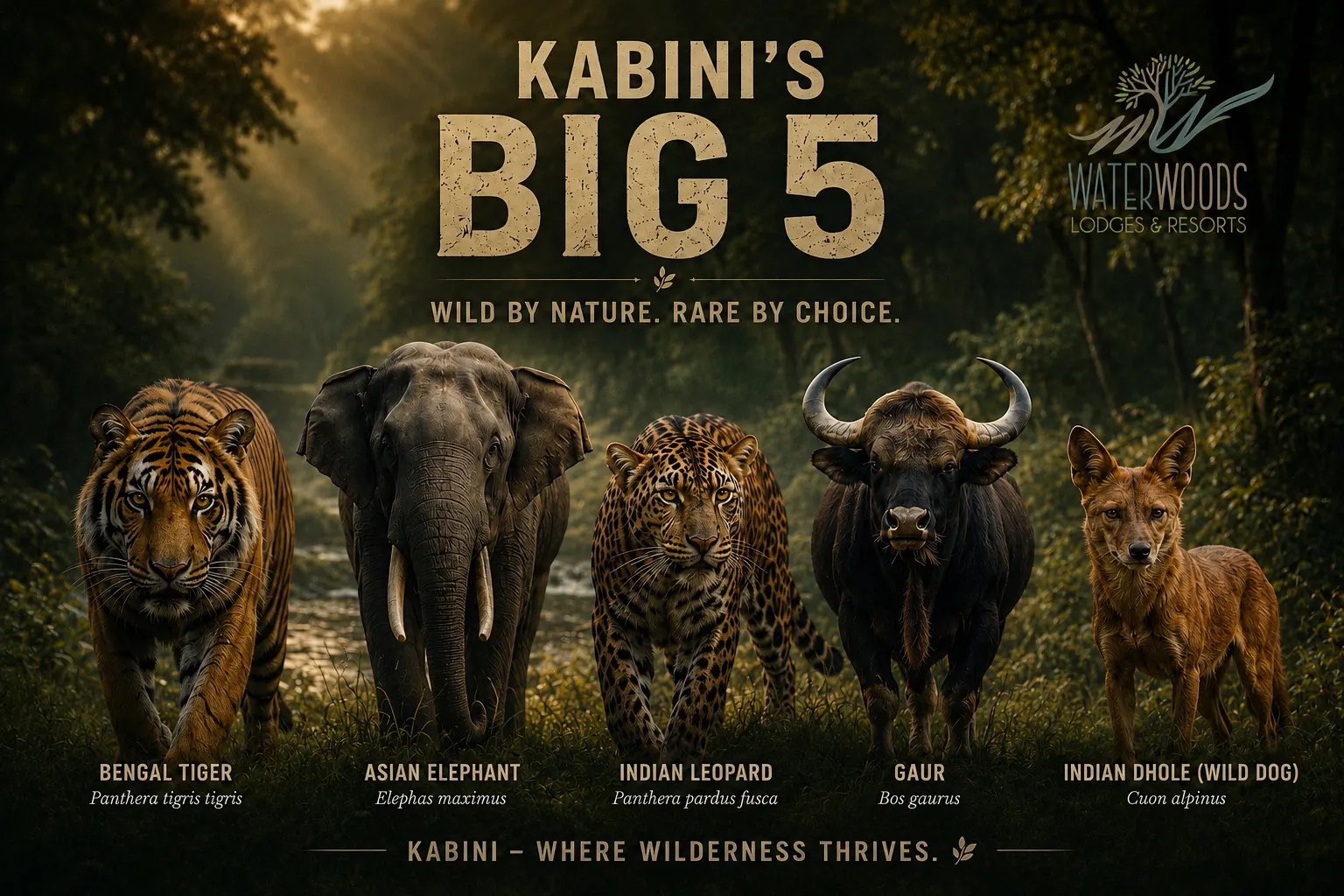
Start with the animal you’re most likely to actually see. Karnataka holds the largest population of the Asiatic elephant anywhere in India, and a significant share of it depends on one resource: the Kabini backwaters. As the dry season sets in and water elsewhere in the forest disappears, herds numbering in the hundreds converge here to drink, bathe and graze on the exposed grassy banks of one of the largest seasonal congregations of wild elephants recorded anywhere in the world.
It’s a rare kind of asiatic elephant habitat, one where matriarch-led herds, calves included, stay visible for hours rather than vanishing back into tree cover the moment a vehicle approaches. A good Kabini elephant safari timed for the late-dry months can mean watching multiple herds at once, some carrying tuskers of genuinely striking size and it’s this concentration, more than any single sighting, that makes elephant safari in Kabini trips some of the most consistently rewarding in the country. Guides are quick to remind guests, though, that “gentle giant” is a reputation, not a guarantee a herd that feels threatened, particularly one with young calves, will react fast and hard, which is exactly why boats and jeeps keep a respectful distance.
The Cat Nobody Expects to See
Every so often, a single animal becomes bigger than the forest it lives in. That’s what happened with Kabini’s melanistic leopard known locally as Karia, or simply Blackie whose excess of dark pigment turns an ordinary leopard into something that looks almost mythological against dappled light. Sightings of this individual, and others like him over the years, have made Kabini one of the very few places on the planet where a black leopard in Kabini encounter is even a realistic possibility rather than a rumor.
It hasn’t been an easy existence. Melanistic coloring works against camouflage rather than for it in daylight, which made early hunting difficult for animals like Karia before they learned to compensate and territorial disputes with rival leopards over the years have added their own visible scars. None of this is a promise that a black panther in Kabini sighting awaits any given visitor; these are wild, wide-ranging cats, not zoo residents on a schedule. But their presence here, confirmed and photographed repeatedly over more than a decade, is part of why wildlife photographers treat Kabini as a genuinely different tier of destination.
The Muscle of the Forest
`Nothing in Kabini looks less like it should be afraid of a tiger and yet nothing seems less bothered by one than the gaur. Weighing up to a tonne and a half in mature bulls, it’s the largest wild cattle species on the planet, and there are well-documented cases of gaur herds driving off tigers that pushed too close to a calf. That combination of raw size and calm herd discipline makes it one of the more quietly dominant presences in this ecosystem, despite being a grazer rather than a predator.
Herds tend to work the open meadows near the backwaters at the cooler edges of the day, usually following an older female’s lead, and melt back into cover fast the moment a vehicle gets too close. Spend enough mornings on Kabini safari animals watching this pattern, and the gaur starts to look less like background wildlife and more like one of the forest’s genuine power brokers.
The Pack That Hunts Smarter, Not Bigger
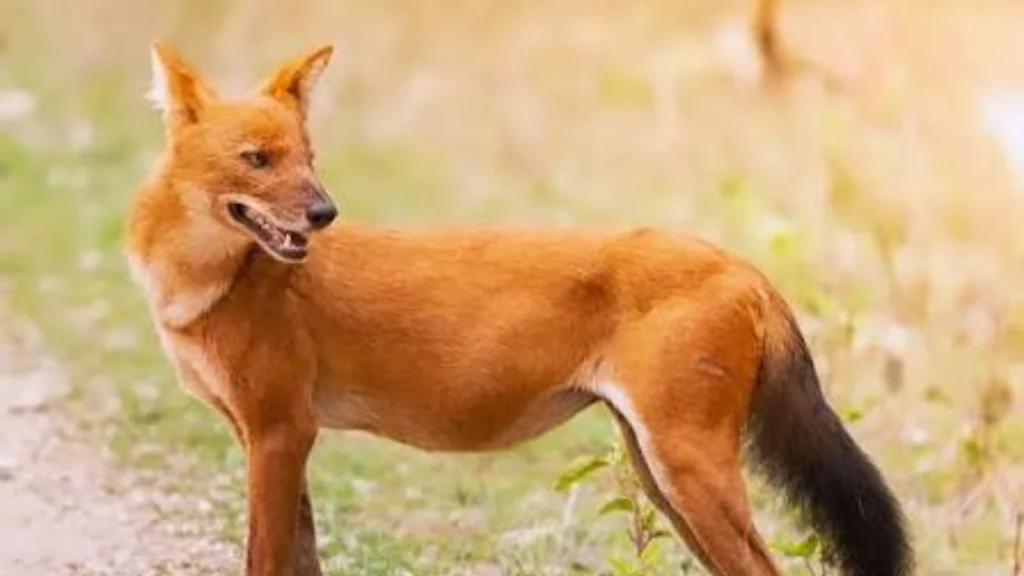
Of everything sharing this landscape, the Indian dhole is the one most visitors have never heard of before their trip and often the one they talk about most afterward. Hunting in coordinated clans of a dozen or more, dholes take down prey considerably larger than themselves through pure teamwork: chasers and pacers rotating in relay, prey driven toward water where escape gets harder. It’s a strategy effective enough that dhole packs have been documented challenging even a lone tiger over a kill.
They’re also one of Asia’s most endangered canids, which makes a dhole sighting genuinely rare rather than just uncommon. See one in Kabini, and you’ll almost always see the whole pack a detail that turns a chance encounter into one of the more memorable entries on any list of rare wildlife in Kabini.
What the Water Hides
The Kabini River does more than draw elephants. Its backwaters support an entire riverine cast that rarely makes the highlight reel: smooth-coated otters moving in tight family groups along the banks, mugger crocodiles sunning motionless on the mudflats before vanishing into the water without a ripple, and the occasional Indian rock python coiled near the shoreline. A boat safari Kabini’s signature advantage over most Indian tiger reserves, which offer jeep tracks only is often where these sightings happen, at a slower pace and closer range than a land safari ever allows.
This is also where Kabini wildlife stops being just a list of species and starts feeling like an actual working ecosystem: predator, prey, scavenger and grazer, all drawing from the same shrinking waterline through the dry months.
A Sky Full of Reasons to Look Up
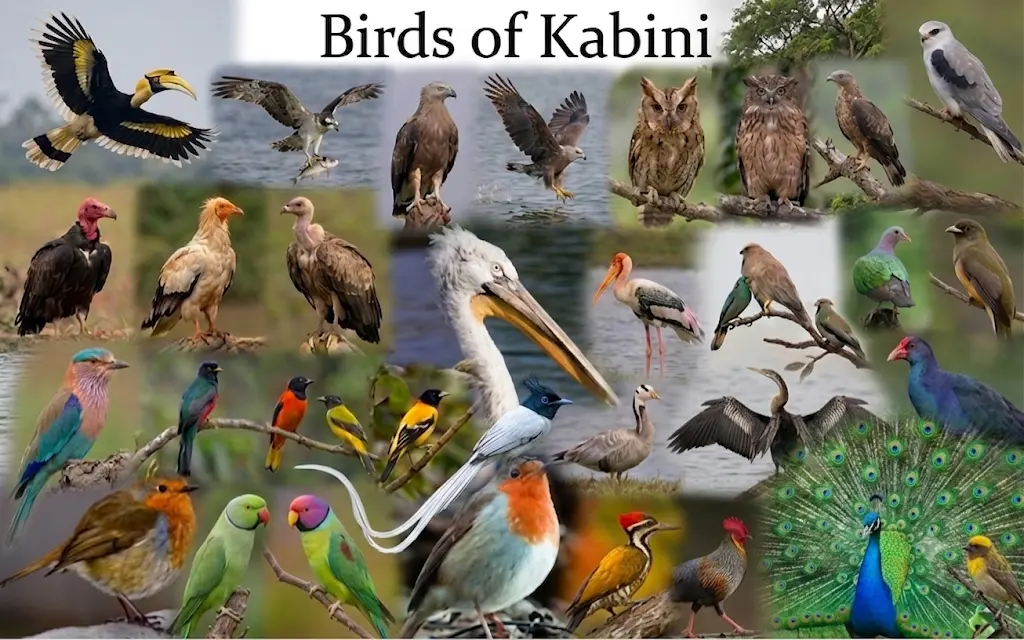
Somewhere past 250 recorded species, Kabini’s bird checklist stops being a footnote and becomes its own reason to visit. Ospreys stall and drop feet-first into the water after fish spotted from thirty metres up. Oriental darters nicknamed snake-birds for their long, sinuous necks spear prey underwater before surfacing to toss and swallow it whole. Crested serpent eagles and changeable hawk-eagles patrol from high, exposed perches, while flashes of blue and orange along the banks mark white-throated and pied kingfishers working the shallows.
For visitors who came for big mammals and stayed for the birdlife, this is usually the moment Kabini wildlife stops meaning “tiger and friends” and starts meaning something closer to its actual scale.
Why It All Adds Up to Kabini's Big Five
None of this diminishes the tiger it just puts it in proportion. Kabini’s reputation as one of India’s finest wildlife destinations was never built on one species doing all the work. It was built on a river valley where an elephant herd, a rare black cat, the world’s largest wild bovine, a pack of coordinated hunters and over 250 species of birds all draw from the same water, in the same season, often in the same single morning. The tiger gets the headline because it’s the easiest story to tell. Everything else is what actually makes the forest extraordinary.
Frequently Asked Questions
What wildlife is Kabini famous for besides tigers?
Kabini is equally known for its Asiatic elephant congregations, a rare melanistic leopard population, gaur, Indian dhole packs, and a rich riverine ecosystem of otters, mugger crocodiles and over 250 recorded bird species making it a far broader wildlife destination than tiger sightings alone suggest.
Where can you see Asiatic elephants in Kabini?
The Kabini backwaters are the main draw, especially during the dry season, when herds gather in large numbers to drink and graze on the exposed banks. Both boat and jeep safaris offer strong elephant-viewing opportunities, though the backwaters typically provide the closest, most sustained sightings.
Is Kabini one of the best Asiatic elephant habitats in India?
Karnataka holds the country’s largest Asiatic elephant population, and Kabini’s backwaters are widely regarded as one of the largest seasonal elephant congregation points anywhere, making it one of India’s most significant habitats for the species during the dry months.
Are black panthers found in Kabini?
Yes Kabini is one of the very few places in the world where a melanistic leopard, popularly called a black panther, has been repeatedly and reliably sighted over the years. Sightings remain rare and unpredictable, as these are wide-ranging wild animals, not a guaranteed attraction.
What animals can you see during a Kabini safari?
Beyond tigers, expect regular sightings of elephants, gaur, spotted deer, sambar, langurs and macaques, with leopards, dholes, otters and mugger crocodiles turning up less predictably. Boat safaris add strong odds for waterbirds, crocodiles and otters that jeep safaris typically miss.
What makes Kabini National Park wildlife unique?
Its river system is the differentiator the backwaters concentrate elephants, gaur and predators around a shrinking waterline in a way few other Indian reserves replicate, while also supporting a genuinely diverse riverine and bird ecosystem alongside the more famous big cats.
Which safari offers the best chance to spot wildlife in Kabini?
Boat safaris on the backwaters are best for elephants, crocodiles, otters and waterbirds, while jeep safaris through the forest interior offer better odds for tigers, leopards, gaur and dhole. Combining both across a stay gives the fullest picture of what the region holds.
Why is Kabini considered one of India's top wildlife destinations?
Few Indian forests combine this much species diversity in one accessible landscape big cats, elephants, an endangered pack predator, a rare melanistic leopard, and a river ecosystem supporting hundreds of bird species, all within the same connected stretch of the Nilgiri Biosphere Reserve.