

There is a particular kind of silence that greets you at Kabini just before dawn not the absence of sound, but a fullness of it. The river breathes slowly. A fish eagle calls from somewhere you cannot see. Something rustles in the tall grass near the water’s edge, and before you’ve finished your first cup of tea, the forest is already wide awake.
This is the moment birdwatchers travel across the country and across the world to experience.
Kabini sits in the southern tip of Karnataka, where the river of the same name feeds into a vast reservoir between two of India’s most celebrated tiger reserves. It is one of those rare places where a single morning can fill a notebook. Over 250 species of birds have been recorded here spread across forest canopy, riverbank, open grassland, and the shimmering expanse of the backwaters. For serious birders, it belongs in the same breath as the Bharatpur wetlands or the forests of the Northeast. For curious newcomers, it is a place that quietly turns people into lifelong watchers of the sky.
Where the Forest Meets the River
To understand why birdwatching in Kabini is so extraordinary, you need to understand the landscape first.
The Kabini River begins in the forests of Wayanad in Kerala, then flows east to join the Cauvery. Along the way, it forms a large reservoir separating Nagarhole National Park to the north from Bandipur Tiger Reserve to the south. Together, these two reserves form the core of the Nilgiri Biosphere Reserve a UNESCO-recognised ecological hotspot and one of the most intact wildlife corridors left in southern Asia.
Nagarhole National Park alone covers around 643 square kilometres. It contains a remarkable variety of forest types:
- Moist deciduous forest in the western stretches
- Drier scrub zones toward the east
- Bamboo thickets and teak groves
- Open grasslands
- Marshes, wetlands, and the Kabini backwaters
The park holds Important Bird Area (IBA) status, with records from the region documenting over 300 bird species across its wider boundaries.
What makes the Kabini portion of this ecosystem particularly special is the backwater zone that wide, calm stretch where the forest meets the water’s edge. Species from entirely different ecological niches share the same shoreline here. A crested serpent eagle perches on a dead branch twenty metres from a flock of spot-billed ducks. A painted stork wades through the reeds while a grey-headed fish eagle circles overhead, scanning the current below.
That overlap forest species, waterbirds, and open-country raptors all in the same frame is what gives Kabini birdwatching its remarkable depth.
The Birds of Kabini: Who You'll Actually See
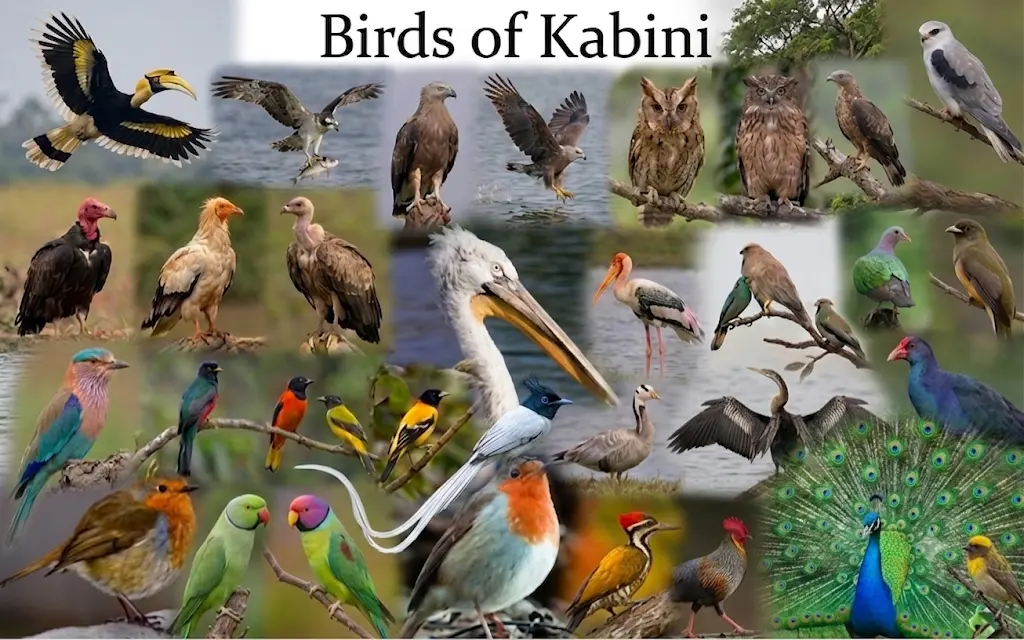
No article can cover all 250 species of birds found here. But some encounters are simply unforgettable.
Forest Birds
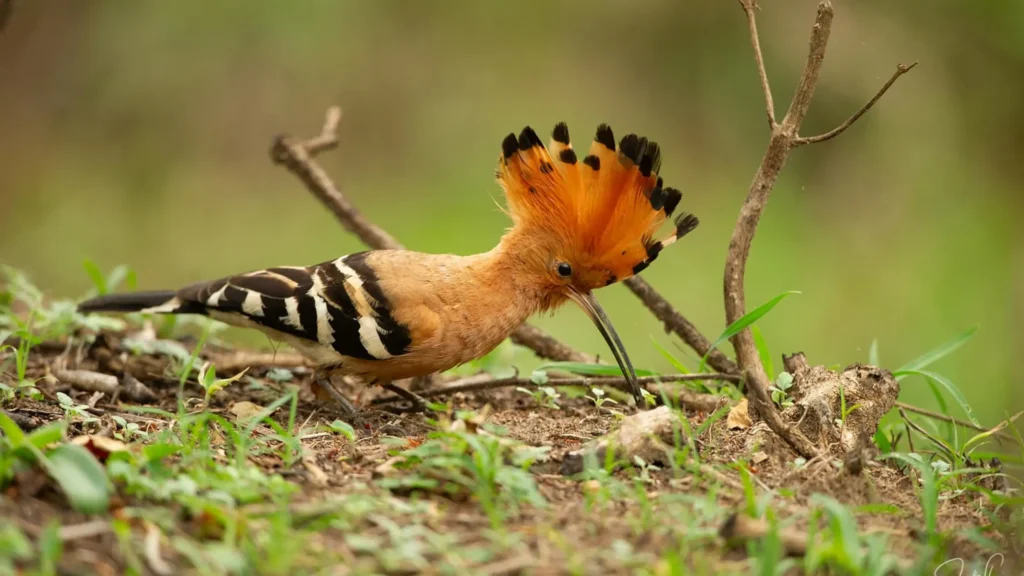
Peafowl & Indian Roller The peacock needs no introduction, but it never gets old especially against Kabini’s lush green backdrop. The Indian Roller, Karnataka’s state bird, looks unremarkable at rest. The moment it takes flight, though, a shock of electric turquoise appears across its wings, stopping most people mid-sentence.
Malabar Pied Hornbill One of Kabini’s most dramatic forest residents. Large, loud, black and white, with a conspicuous casque above its bill the hornbill is often called the “farmer of the forest” for its role in seed dispersal. Seeing one move through the upper canopy at speed is a proper wildlife moment.
Indian Paradise Flycatcher A bird that demands a double take. The male has elongated tail streamers that can reach twice the length of its body. Watch one dart through filtered forest light and you’ll understand why wildlife photographers come back to Kabini year after year.
Woodpeckers Three species are regularly seen: the Common Flameback (golden plumage, red crown), the Streak-throated Woodpecker, and the tiny Indian Pygmy Woodpecker. You’ll often hear their drumming before you spot them.
Other common forest sightings include:
- Green bee-eaters and blue-bearded bee-eaters
- Greater racket-tailed drongos
- Sunbirds and minivets
- Plum-headed and Malabar parakeets
- Tickell’s blue flycatcher
- Orange-headed ground thrush
Waterbirds Along the Kabini Backwaters
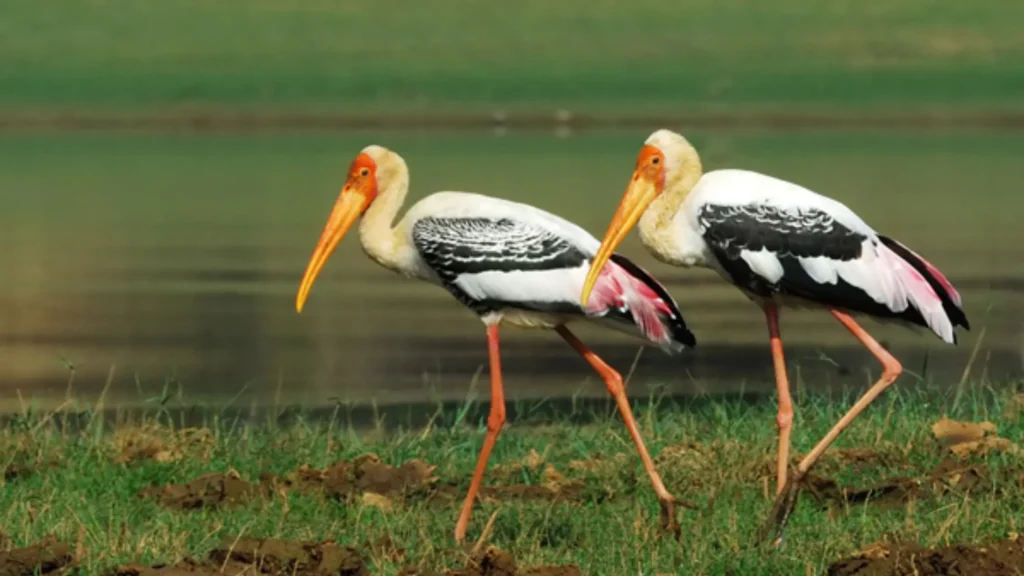
The backwaters bring a different cast of characters entirely.
Painted Stork One of the most photogenic birds in the region. Their pink-tinged tertial feathers and slow, deliberate movement through the shallows make them a favourite for photographers. They are also remarkably unafraid of boats, which helps.
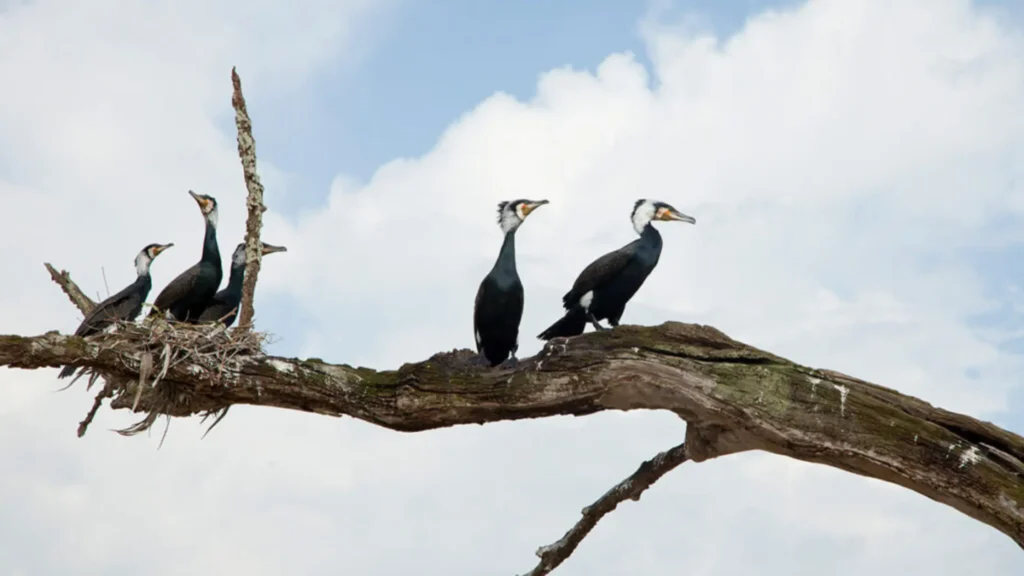
Oriental Darter (Snakebird) Regularly seen perched on rocks with wings spread wide, drying in the morning sun. Their long, thin necks give them an almost prehistoric appearance. They hunt by stabbing fish underwater with a sword-like bill, then swimming back up with only their neck visible above the surface.
Other waterbirds commonly seen:
- Egrets (multiple species)
- Red-naped and black-headed ibises
- Indian spot-billed ducks and lesser whistling ducks
- River terns (winter months)
- Bar-headed geese (migratory)
- Red-wattled lapwings
Raptors: Kabini's Hunters
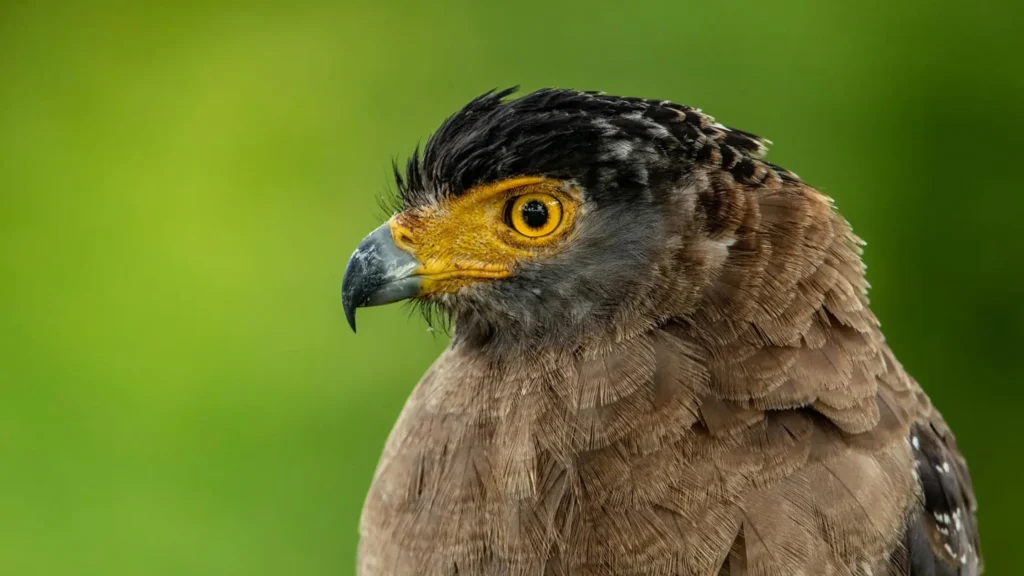
The sky above Kabini is never empty for long.
| Raptor | Where to Spot |
| Grey-headed Fish Eagle | Overhanging branches near the water |
| Crested Serpent Eagle | Forest interior and forest edges |
| Osprey | Hovering over the backwaters before diving |
| Changeable Hawk-Eagle | Perched high in the forest canopy |
| Spot-bellied Eagle-Owl | Dusk and early night, forest zones |
| Brown Fish Owl | Near the river at low light |
Migratory Visitors: October to February
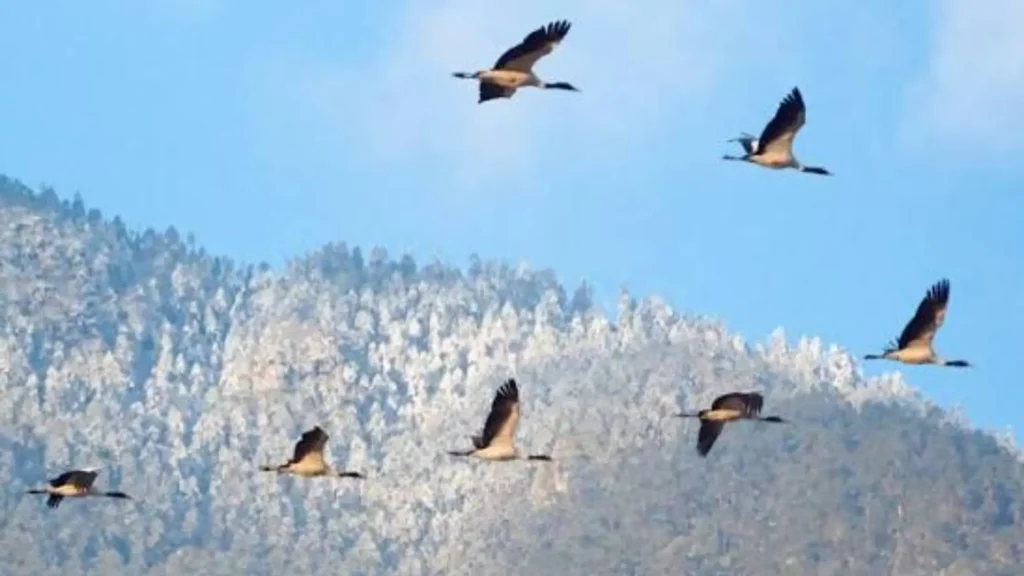
Between October and February, Kabini receives birds from Central Asia, Tibet, Mongolia, and the Himalayas. This seasonal influx meaningfully expands the diversity on offer.
Key migratory species to watch for:
- Bar-headed Goose one of the world’s highest-flying birds, arriving from Russia and Tibet
- River Tern adds movement and sound to the winter backwaters
- Forest Wagtail, Grey Wagtail, White-browed Wagtail common winter arrivals
- Waders, warblers, and various flycatcher species passing through
- During peak winter, a single morning boat safari can turn up species that simply aren’t possible to see at any other time of year.
The Best Birdwatching Sites in Kabini
1. The Kabini Backwaters: The Star Attraction
This is the centrepiece of any birdwatching experience in Kabini. A boat safari on the reservoir at dawn or dusk puts you at eye level with the waterline herons motionless in the shallows, kingfishers darting between perches, eagles circling overhead.
What makes it exceptional isn’t just the birds. Crocodiles bask on the banks. Elephants come down to drink. Smooth-coated otters play near the reeds. The birdwatching experience here happens inside one of India’s most intact wildlife landscapes, and that context changes everything.
2. Nagarhole Forest Trails: The Patient Birder's Reward
Forest birding here is slower and more meditative. You track a Malabar Trogon by its call for twenty minutes before finally locating it. A flash of orange in the leaf litter turns out to be an orange-headed ground thrush. The tall canopy creates ideal conditions for:
- Drongos and barbets
- Sunbirds and bee-eaters
- The endemic Nilgiri Flycatcher
- Malabar Trogon and Indian Pitta
3. The Resort Surroundings: Birdwatching Before Breakfast
Often overlooked, but genuinely productive. For guests staying directly on the water especially at properties like Waterwoods with exclusive backwater access the shoreline and resort grounds offer excellent birdwatching in the quiet hours before and after safaris. Bee-eaters on wires, peacocks in the grass, kingfishers on the waterfront railing. The best birdwatching sometimes happens before you’ve even picked up your binoculars.
When to Go: Seasons for Birdwatching in Kabini
| Season | Months | What to Expect |
| Best for Birding | October – February | Cool weather, lush forest, peak migratory season. The most species diversity of any time of year. |
| Best for Wildlife | March – May | Water sources shrink; elephants, tigers, and gaurs concentrate near the river. Resident bird sightings very reliable. |
| Monsoon | June – September | Park partially closed, but the landscape is extraordinarily beautiful. Tail end of monsoon (late September) is worth catching. |
A three-day stay minimum is recommended. The rhythm of Kabini rewards patience mornings, evenings, and the quiet stretches between safaris all offer something different.
Staying at Waterwoods: The Right Base for the Right Birdwatching Experience
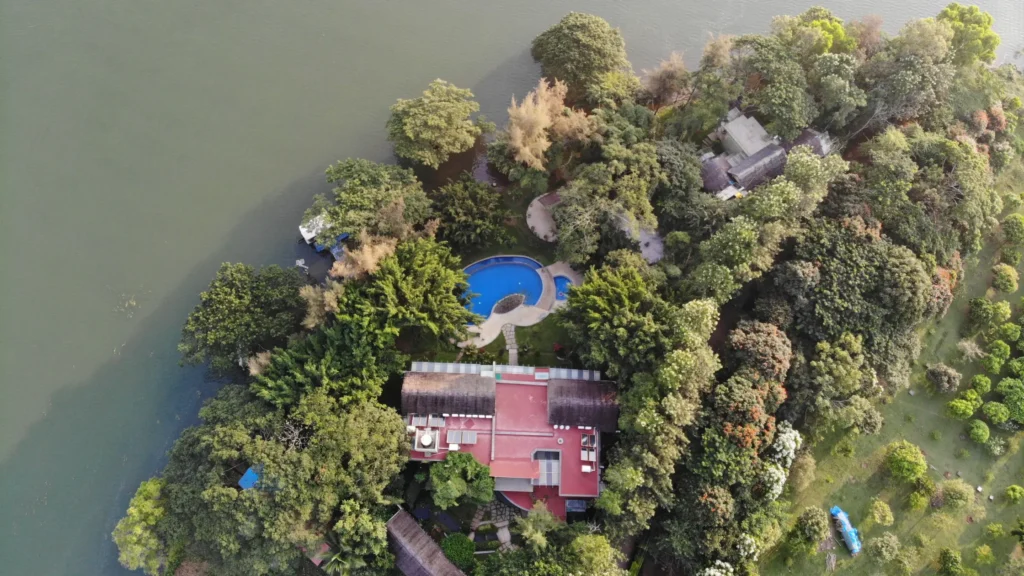
Where you stay in Kabini matters and it matters more for birdwatching than for almost any other activity.
Waterwoods Lodge was established in 1999, making it the first private wildlife lodge at Nagarhole National Park. It sits atop a small hillock with exclusive waterfront access to the Kabini backwaters positioned between Nagarhole and Bandipur, in what is essentially the most active wildlife corridor in the region.
Why Location Changes Everything for Birders
The birds don’t wait for safari hours. At Waterwoods, the birdwatching experience in Kabini begins from the moment you step outside. Most rooms are water-facing, and early morning from your balcony often yields hornbills in the canopy, kingfishers on the waterfront, and painted storks gliding in over the backwaters all before the first safari of the day departs.
What Waterwoods Offers
Accommodation:
- Five room categories Twin Rooms, King Rooms, Superior King Rooms, Family Rooms, and the private Raintree Suite
- The Raintree Suite features two bedrooms, a living area, a Jacuzzi, and a Koi fish pond fully self-contained for families or groups
- Most rooms overlook the river with large windows and private sit-outs
- Infinity pool overlooking the backwaters
Experiences designed around the wildlife:
- Boat safaris on the Kabini backwaters (coordinated by the resort)
- Land safaris into Nagarhole Tiger Reserve
- Guided birdwatching walks with in-house naturalists
- Kayaking on the backwaters
- Sunrise and sunset river cruises
- Visit to a 12th-century Chola-era temple and a 600-year-old banyan tree by boat
- Bonfire evenings by the riverside
- Nature walks through the resort’s organic fruit and vegetable garden
Getting here:
- ~4 hours by road from Bangalore
- ~80 km from Mysuru Airport
- ~210 km from Kempegowda International Airport, Bengaluru
The lodge employs staff exclusively from surrounding villages and tribal communities a commitment to responsible tourism that has been in place since Waterwoods first opened.
“Waterwoods has preserved nature the way it was made so you can experience the excitement, the thrill and the wonder.”
Final Words
250 species of birds is not just a number. It is the result of decades of forest protection, a landscape left largely intact, and an ecosystem where predator, prey, waterbird, and canopy dweller all occupy their proper place. It represents the Nilgiri Biosphere at its best.
But numbers are not why people keep coming back.
They come back because of a particular dawn on the river, or the sound of a hornbill calling through morning mist, or the sight of elephants crossing the backwaters while a fish eagle watches from above. Kabini doesn’t require you to be a birdwatcher to fall in love with it. But spend a morning here really here and birdwatching may well find you.
Frequently Asked Questions
Why is birdwatching in Kabini considered one of the best birdwatching experiences in India?
Kabini sits inside the Nilgiri Biosphere Reserve, a UNESCO-recognised corridor where forest, wetland, and open river come together in one compact area. This combination of habitats supports over 250 species of birds resident species, raptors, waterbirds, and winter migrants creating a diversity rarely found this far south in India. The exceptional wildlife density adds another dimension: you are rarely watching birds without elephants, crocodiles, or large predators somewhere in the same frame. That layering of experience is what sets Kabini birdwatching apart.
What are the most commonly seen birds during birdwatching in Kabini?
The most reliable sightings include Indian rollers, common and white-throated kingfishers, Malabar pied hornbills, painted storks, grey-headed fish eagles, crested serpent eagles, Indian paradise flycatchers, common flamebacks, peafowl, green bee-eaters, and greater racket-tailed drongos. Along the water, Oriental darters, egrets, red-naped ibises, and spot-billed ducks appear regularly. In winter, bar-headed geese and river terns join the mix. The Indian roller and Indian paradise flycatcher are consistent favourites for photographers.
Which are the best birdwatching sites in Kabini for nature enthusiasts?
The Kabini backwaters are the standout location for most visitors a boat safari at dawn puts you at water level among kingfishers, herons, eagles, and migratory waterfowl, with crocodiles and elephants often visible in the same stretch. Forest trails within Nagarhole reward patience with canopy species like Malabar trogon, Indian pitta, and the endemic Nilgiri flycatcher. The resort surroundings particularly at properties with direct backwater access like Waterwoods are also surprisingly productive in the quiet hours either side of the organised safari schedule.
Can beginners enjoy a birdwatching experience in Kabini?
Yes, easily. Many of Kabini’s most spectacular species are large, colourful, and found in open habitats where visibility is excellent the backwaters in particular are far more forgiving than dense forest for first-time birders. Guided boat safaris and naturalist-led walks mean there is always someone to help identify what you’re seeing and explain the behaviour behind it. Most beginners leave with a list that impresses even experienced birders. You don’t need specialist equipment or prior knowledge just curiosity.
How does staying at a luxury resort enhance the birdwatching experience in Kabini?
A well-placed, well-run resort extends your effective birding hours considerably. Properties with direct river access like Waterwoods allow you to observe bird activity from your room or deck at first light, long before any safari departs. In-house naturalists add context that turns sightings into genuine encounters rather than ticks on a checklist. Good food and comfortable beds matter too: birdwatching rewards people who are alert and patient, and that’s much easier to sustain when you’ve slept well and eaten properly.
Which waterfront locations in Kabini offer the best birdwatching opportunities?
The Kabini backwaters particularly the shallower edges of the reservoir accessible by boat consistently produce the most waterbird activity. Early morning is the most productive window, when herons, darters, painted storks, and kingfishers are actively feeding. Properties situated directly on the water, like Waterwoods Lodge, offer a real advantage: the shoreline is essentially a continuous birdwatching site available at all hours, not just during formal safaris. The stretch between Nagarhole and Bandipur is the most productive section of the whole backwater system.
What are the chances of spotting over 250 species of birds in Kabini throughout the year?
Seeing all 250 species in a single trip is not realistic that tally represents cumulative records across the full ecosystem over many years and seasons. However, a well-planned three-to-five day stay during the October to February season, mixing boat safaris, forest walks, and attentive mornings at the waterfront, can reasonably yield 80 to 120 species. Even a two-day visit in peak season produces impressive results for most visitors. The key is combining both boat and land safaris rather than relying on just one.
What wildlife can be seen alongside birds during a Kabini birdwatching tour?
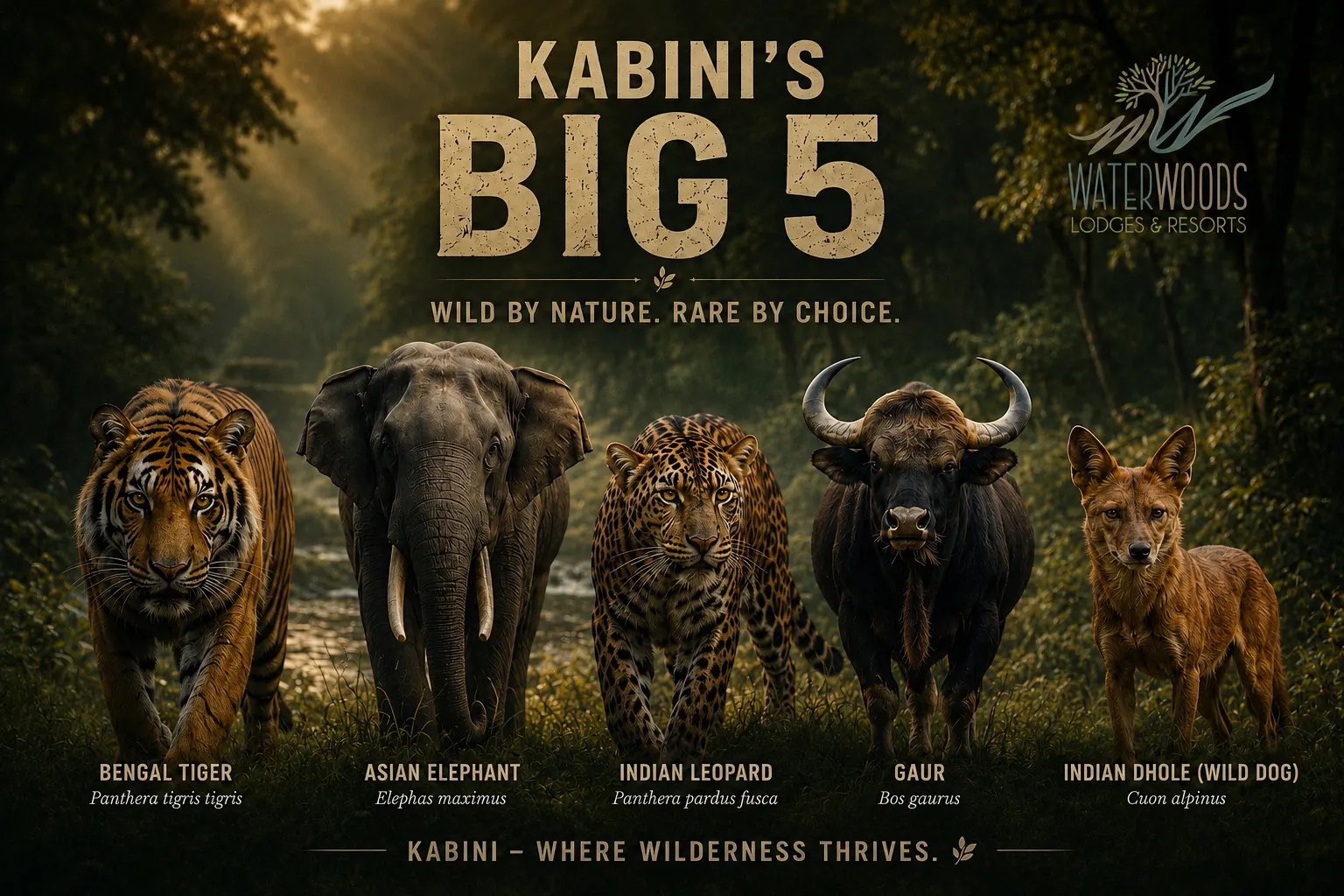
Quite a lot. Boat safaris regularly encounter Asian elephants bathing in the backwaters, mugger crocodiles on the banks, and smooth-coated otters in the shallows. Land safaris into Nagarhole offer sightings of gaurs, sambar and spotted deer, dholes, sloth bears, Indian leopards, and Bengal tigers. The Kabini corridor is one of South India’s better areas for leopard sightings as well. For wildlife photographers, the overlap of 250 bird species with this density of large mammals makes Kabini a destination with very few equals anywhere in the country.