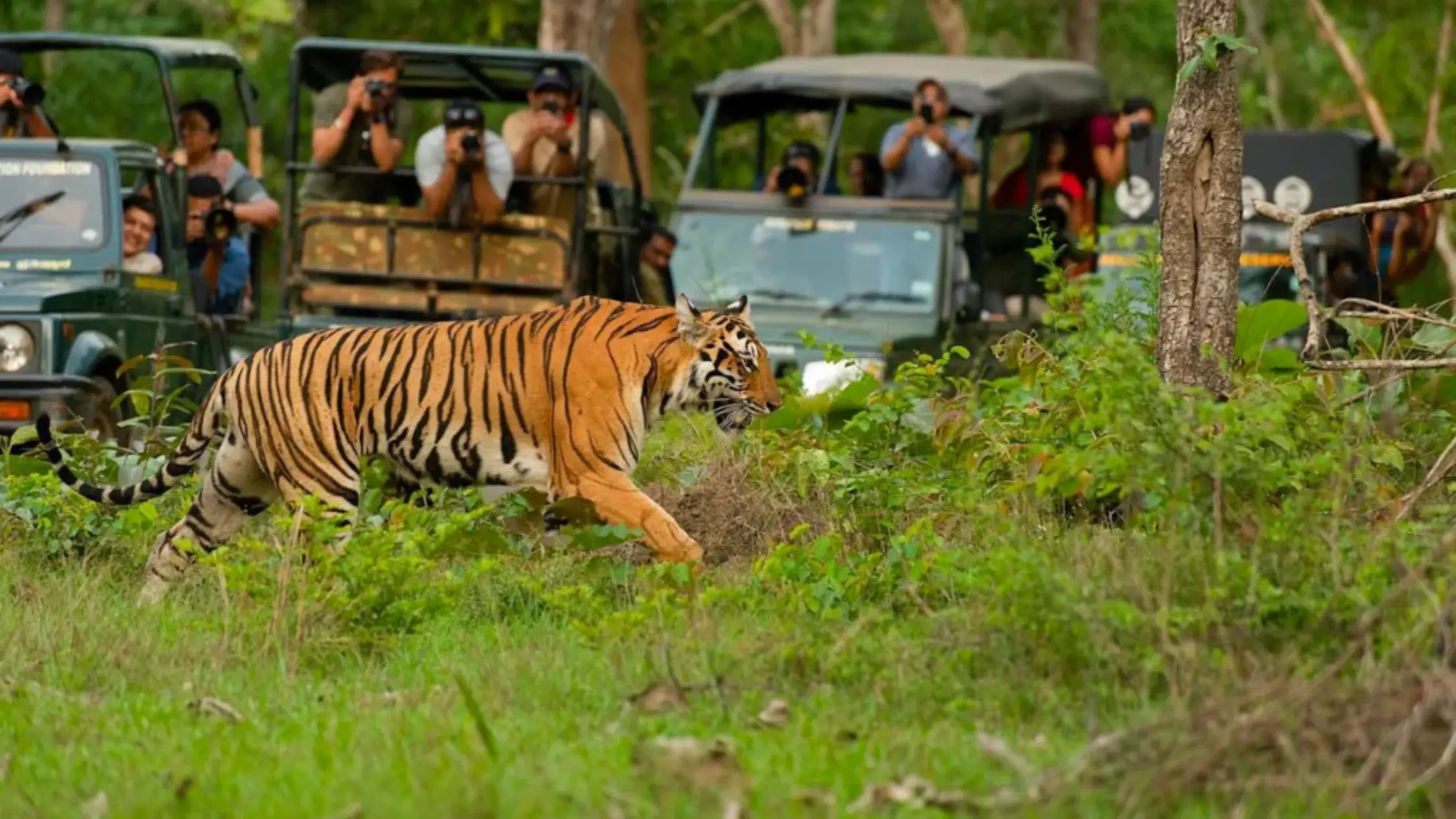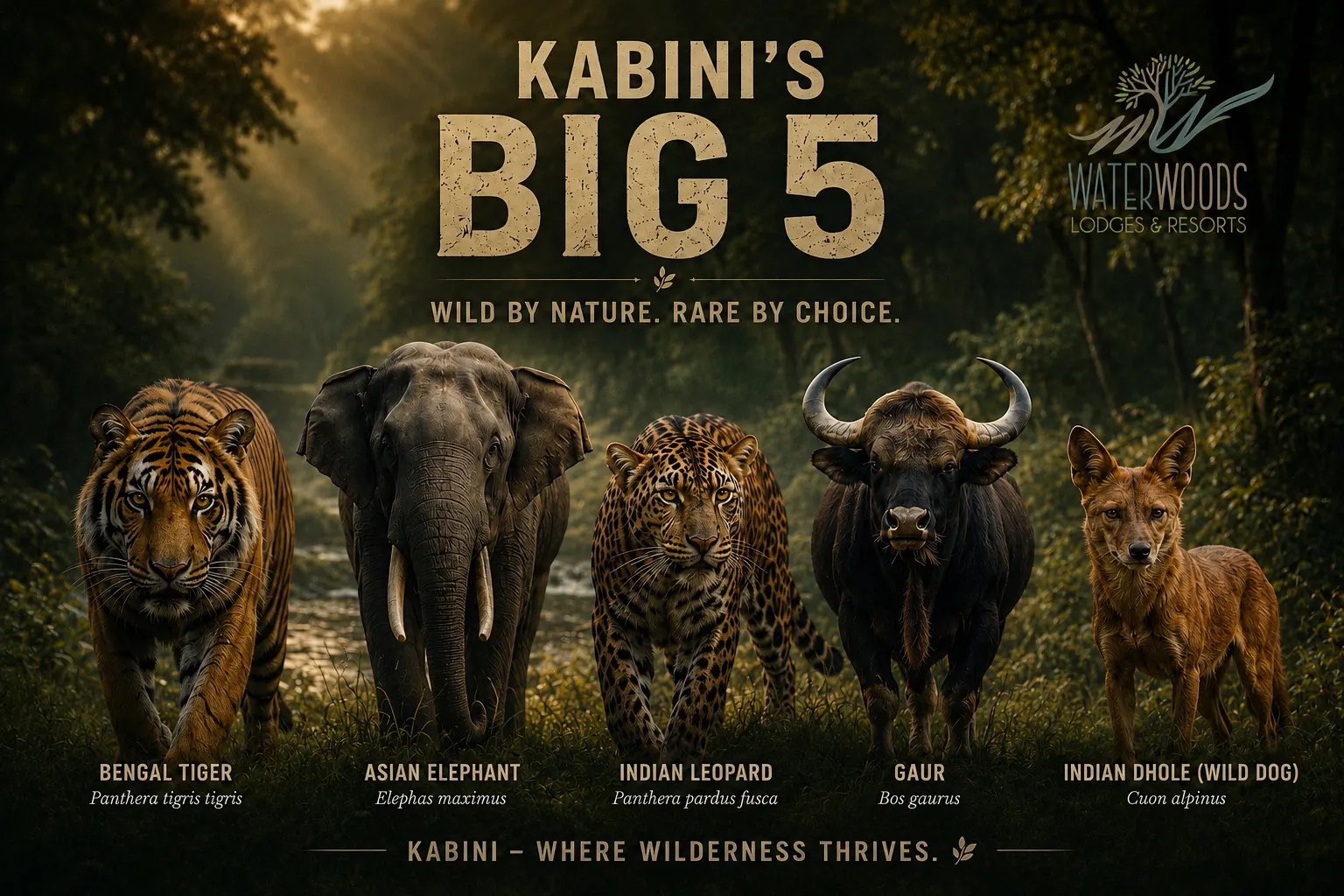


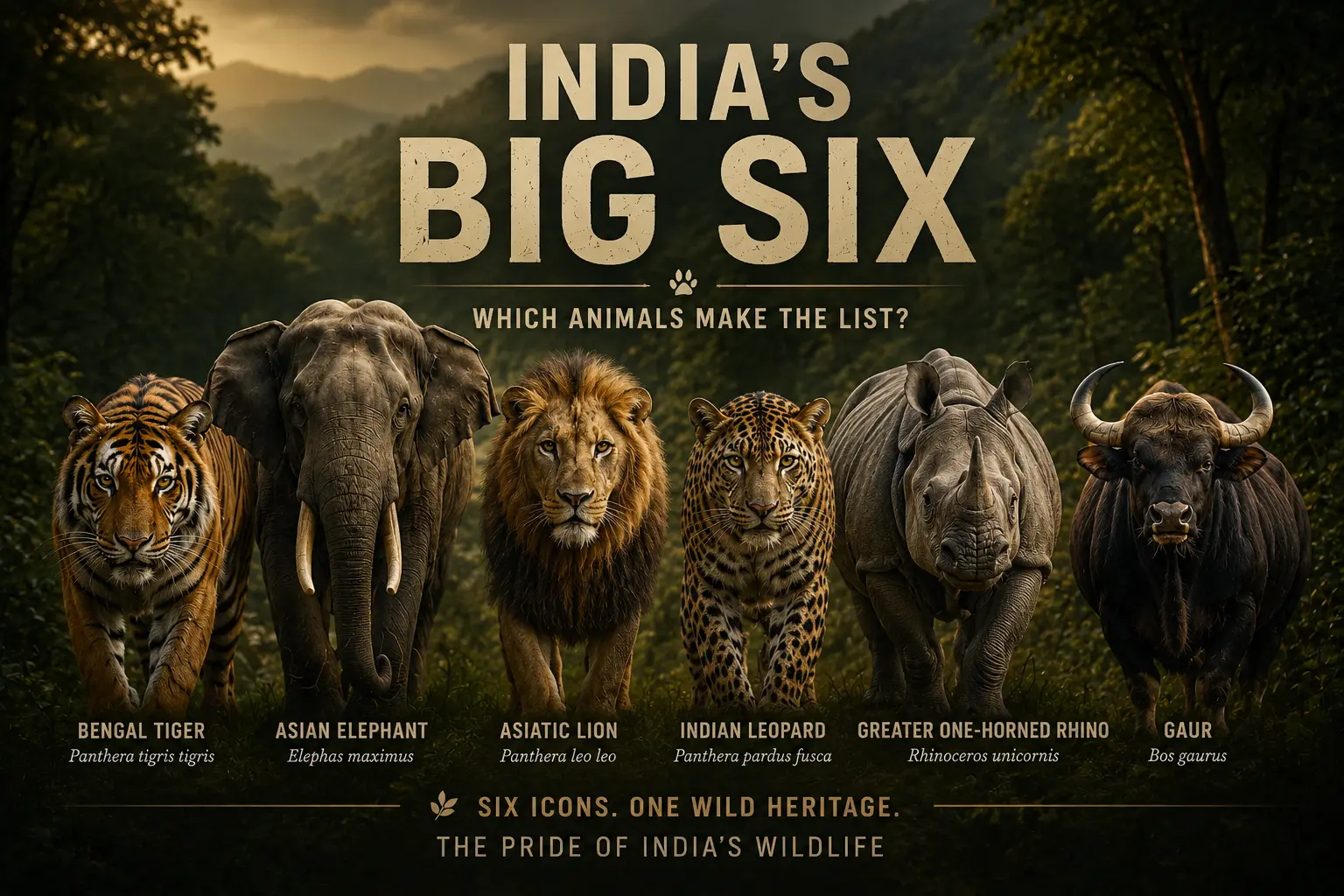
Zoom out from any single forest Kabini included and a bigger question starts to take shape: which animals actually represent India’s wildlife on a national scale? Ask ten safari guides across ten different states and most will converge on the same six names, even if they’ve never compared notes.
That convergence is worth paying attention to. It’s not an official list. Nobody in government has stamped it. But India’s big six has become the working shorthand serious wildlife travellers use to describe the species that define this country’s forests, grasslands and wetlands, the way Africa’s five defined a continent’s.
Here’s who actually makes that list, and just as importantly why almost nowhere in India can you see all six on the same trip.
What Is India's Big Six?
The six names that recur across guide circles, photography forums and conservation writing are the Bengal tiger, Asian elephant, Asiatic lion, Indian leopard, greater one-horned rhino, and gaur. Between them, they cover four of India’s most distinct ecosystems dry deciduous forest, semi-arid scrubland, floodplain grassland and the Western Ghats which is exactly why no single park hosts all six.
That’s the honest caveat worth stating upfront: India big six wildlife isn’t a checklist any one wildlife sanctuary in India can promise in full. It’s closer to a curated tour of the country’s ecological range, six species standing in for six very different kinds of wild India.
Meet India's Big Six
Bengal Tiger (Panthera tigris tigris)
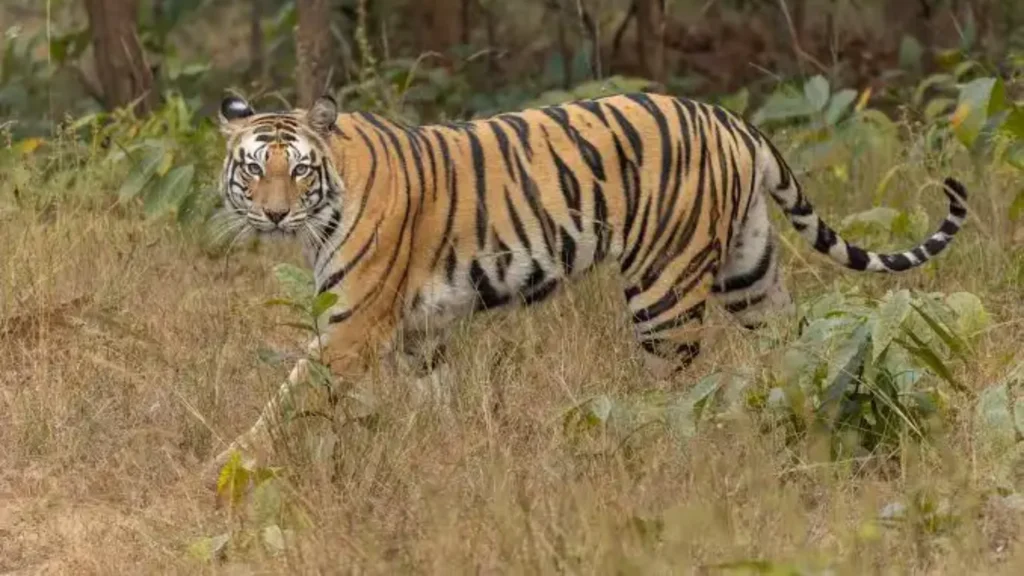
The tiger is the animal most people picture first when they think of Indian wildlife, and the numbers back that instinct up India now holds the majority of the world’s remaining wild tigers, spread across landscapes as different as Central India’s dry forests and the mangrove swamps of the Sundarbans. Solitary, territorial, and requiring large unbroken tracts of habitat to hunt and raise cubs, the tiger sits at the top of the food chain in nearly every reserve it inhabits, from Karnataka’s Nagarhole and Bandipur to Madhya Pradesh’s Bandhavgarh and Kanha.
Asian Elephant (Elephas maximus)
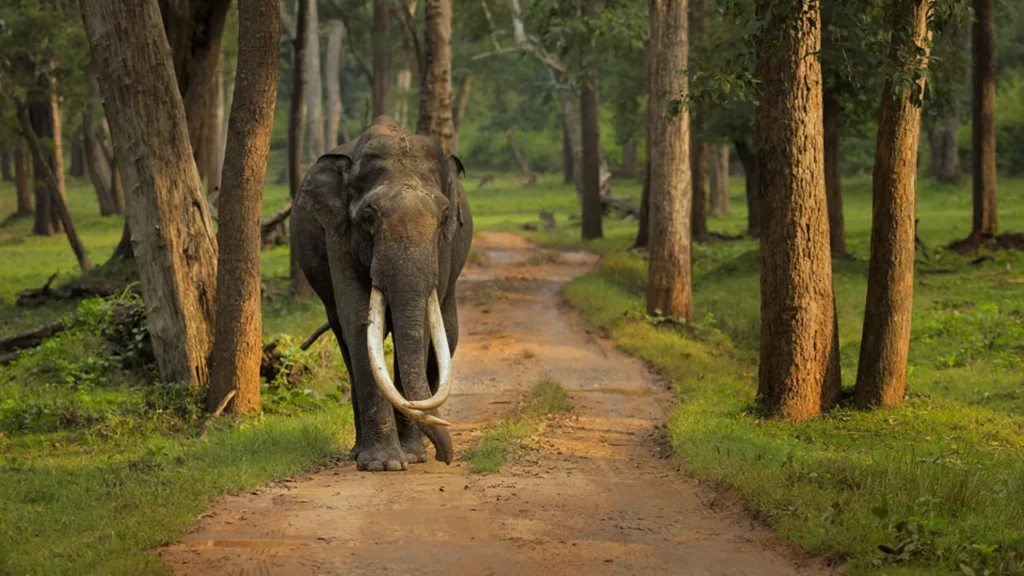
Matriarch-led, deeply social, and capable of real aggression when a calf feels threatened, the Asian elephant is one of the country’s most widely distributed large mammals found from the Western Ghats to the forests of the Northeast. Karnataka alone carries the largest state population in India, with seasonal congregations along rivers like the Kabini drawing hundreds of animals during the dry months. Few species do more to shape the forests they live in: elephants disperse seeds, dig water holes other animals depend on, and physically reshape vegetation as they move.
Asiatic Lion (Panthera leo leo)
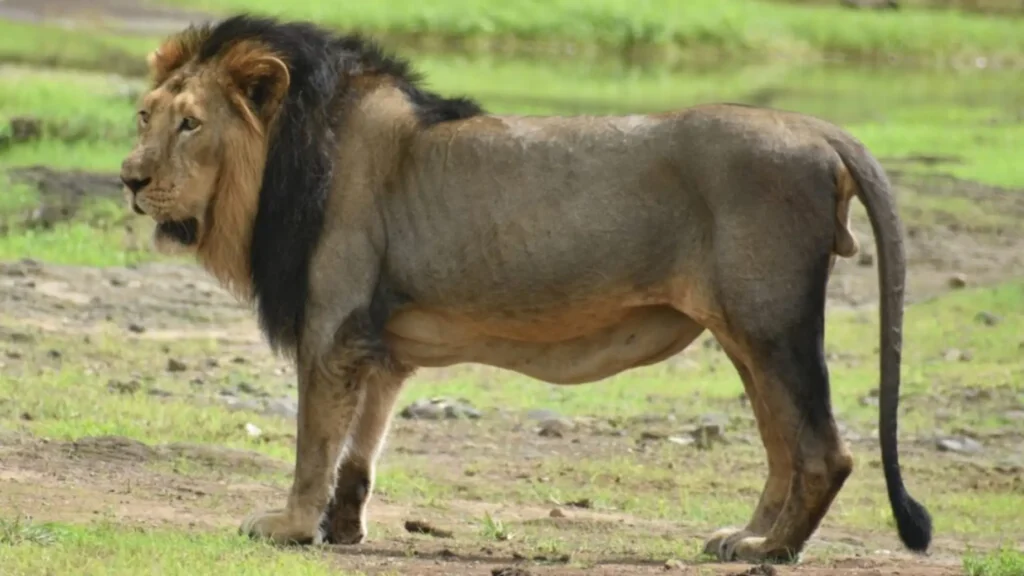
Once ranging across much of western and northern India and the Middle East, the Asiatic lion now survives in the wild only in and around Gujarat’s Gir National Park and its surrounding landscape. A 2025 census recorded the population at 891 up sharply from 674 in 2020, with a growing share now living in satellite habitats outside the traditional core forest, a genuine conservation success story reversing a species that once numbered barely in the hundreds. Slightly smaller than their African cousins, with a shorter mane and a distinctive belly fold, Asiatic lions live in smaller prides and often hunt in flatter, drier terrain than the African savanna most people picture.
Indian Leopard (Panthera pardus fusca)
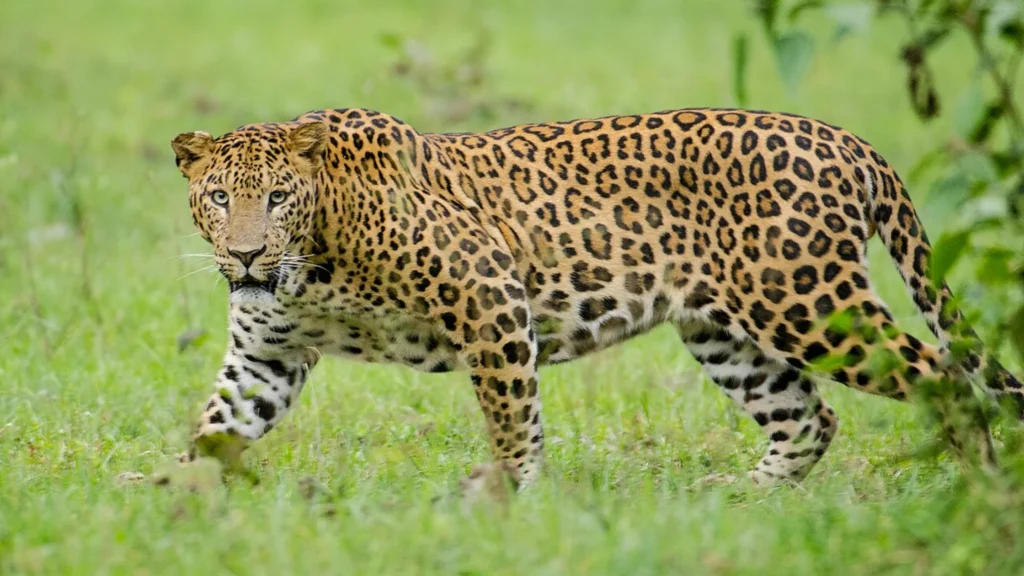
The most adaptable of India’s big cats, the Indian leopard turns up in habitats ranging from dense forest to farmland edges and even the outskirts of major cities. Solitary and largely nocturnal, it survives by staying unseen climbing well above eye level to rest, hunting opportunistically, and avoiding direct competition with tigers wherever the two overlap. Karnataka’s forests, Kabini among them, hold healthy leopard populations, and on rare occasions produce something rarer still: a melanistic individual, popularly known as a black panther, that briefly turns local legend into global wildlife news.
Greater One-Horned Rhino (Rhinoceros unicornis)
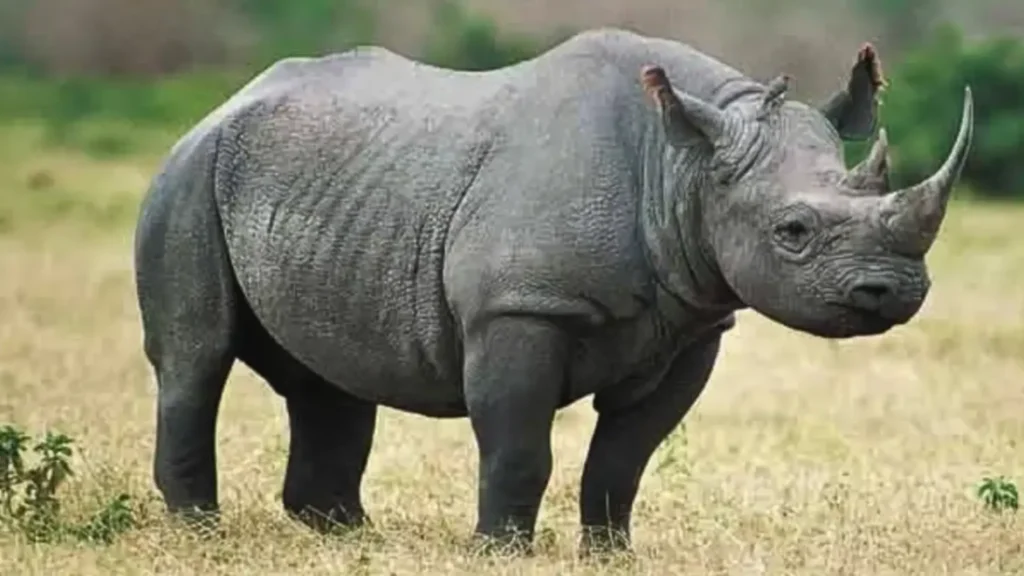
Almost the entire global population of this species lives in one country, concentrated overwhelmingly in Assam. Kaziranga National Park alone is home to well over 2,600 individuals, with smaller populations in Assam’s Orang and Pobitora sanctuaries and West Bengal’s Jaldapara. Once reduced to just a few hundred animals through hunting and habitat loss, the greater one-horned rhino’s recovery driven by decades of protection and anti-poaching enforcement is now held up internationally as one of conservation’s clearer success stories, even as the species remains classified as vulnerable.
Gaur (Bos gaurus)
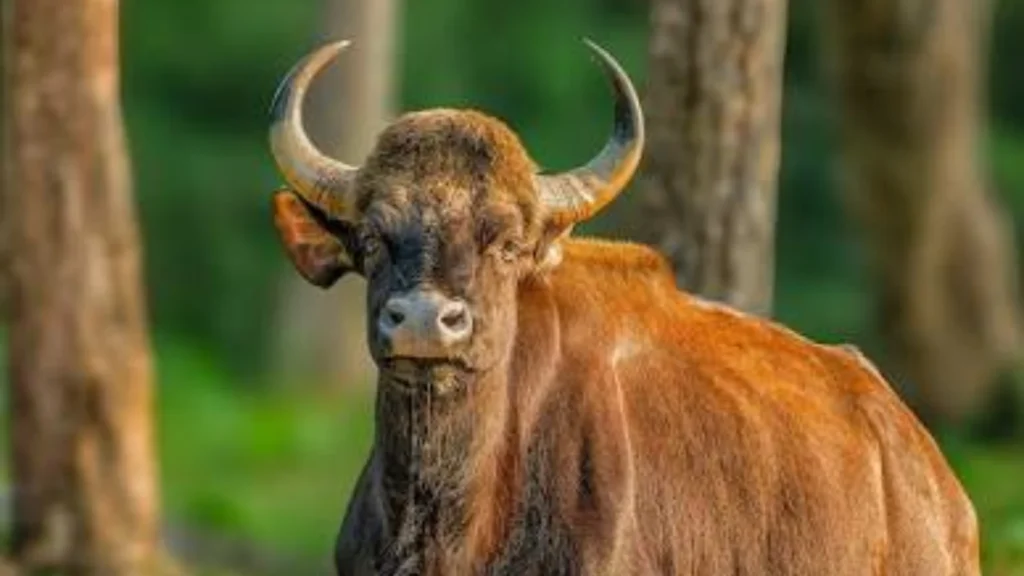
The largest wild cattle species on Earth, with mature bulls weighing well over a tonne, the gaur is a grazer that behaves like it owns the forest and in many cases, it effectively does. Documented cases exist of gaur herds driving off tigers that pushed too close to a calf. Found across the Western Ghats, Central India and parts of the Northeast, gaur herds are surprisingly shy for their size, typically grazing in open meadows at the cooler edges of the day before retreating into tree cover.
Why No Single Park Has All Six
Lay these six ranges on a map of India and the spread becomes obvious. Lions exist only around Gir, in Gujarat’s dry western scrubland. Rhinos are almost entirely an Assam story, tied to the Brahmaputra’s floodplain grasslands. Tigers, elephants, leopards and gaur, on the other hand, share overlapping ranges across large stretches of Central India and the Western Ghats which is exactly why four-species sightings are realistic in the right forest, while a full six-species trip means visiting at least two, usually three, separate regions of the country.
That geographic split is worth understanding before booking anything built around big six safari of India marketing. No single wildlife sanctuary in India can responsibly promise all six in one visit, and any operator claiming otherwise is stretching the truth. What’s realistic and still genuinely rare on a global scale is a landscape where four of the six overlap in one trip.
Where Kabini Fits Into the List
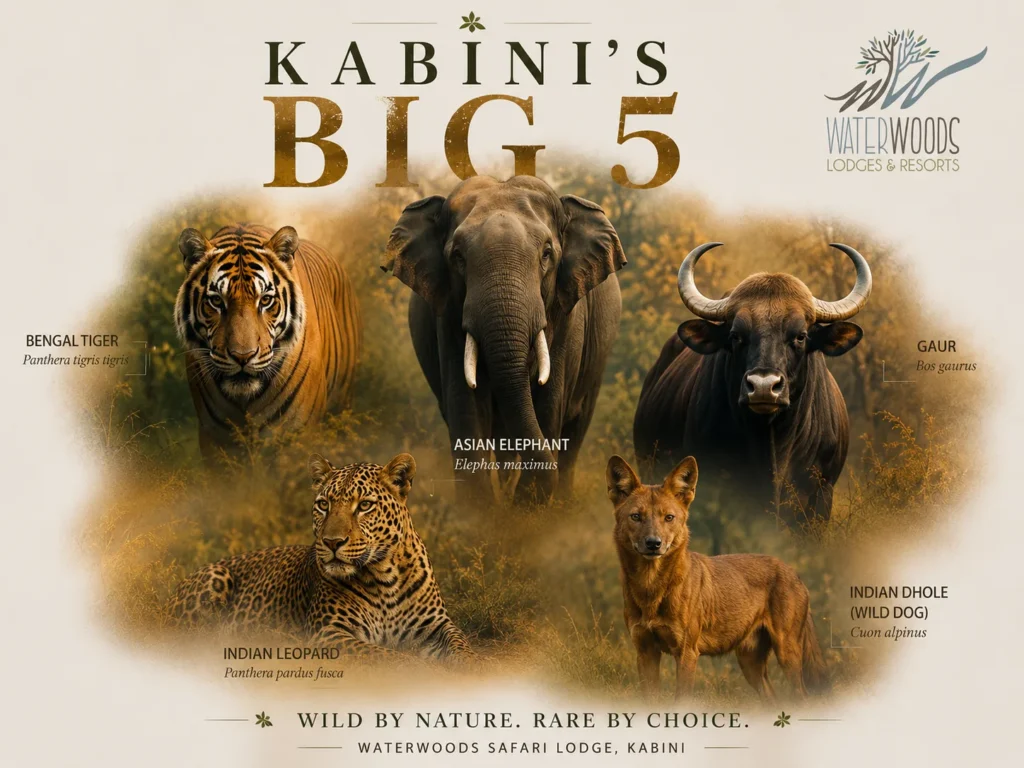
This is where the kabini forest in India landscape earns its place in the conversation. Sitting inside Nagarhole National Park and the Nilgiri Biosphere Reserve, Kabini is one of the relatively few places in the country where the Bengal tiger, Asian elephant, Indian leopard and gaur four of the six genuinely share one river valley, visible on the same safari route, sometimes the same morning. Add the region’s dhole population, and you’re looking at one of the most concentrated wildlife landscapes anywhere in the country, even without a lion or rhino in range.
That’s not a small claim. Across the broader landscape of wildlife of India, very few reserves can put four of six national icons in front of one camera lens within a single stay which is a meaningful part of why Kabini keeps showing up on shortlists for the best wildlife in India, alongside Central India’s tiger reserves and Assam’s rhino strongholds.
Final Word
India’s Big Six was never going to fit neatly inside one park’s boundary, and that’s arguably the more interesting story a country large and ecologically varied enough that its six most iconic species live an entire subcontinent apart from each other. Kabini won’t give you a lion or a rhino. But four out of six, sharing one forest, is a stronger claim than most wildlife destinations anywhere in the world can make.
Frequently Asked Questions
Which animals are included in India's Big Six wildlife?
India’s Big Six generally refers to the Bengal tiger, Asian elephant, Asiatic lion, Indian leopard, greater one-horned rhino and gaur. It’s an informal, widely used term among guides and wildlife travellers rather than an official government classification.
Why is India's Big Six considered the ultimate wildlife safari experience?
Each of the six represents a different Indian ecosystem dry forest, floodplain grassland, semi-arid scrub and the Western Ghats so pursuing all six effectively means experiencing the country’s full ecological range, not just its most famous single species.
Is Kabini Forest in India one of the best places to spot India's Big Six?
Kabini can’t offer the lion or rhino, both restricted to Gujarat and Assam respectively, but it’s one of the strongest places in the country to see four of the six tiger, elephant, leopard and gaur genuinely sharing one landscape.
Which wildlife sanctuary in India offers the highest chances of seeing India's Big Six?
No single sanctuary offers realistic chances at all six, given how geographically separated lion and rhino habitats are from the rest. Kabini and similar Western Ghats reserves offer the strongest odds for four of the six in one visit.
Can you see tigers, elephants, and leopards in Kabini on the same safari?
All three are resident species in the Kabini–Nagarhole landscape and are recorded regularly. No single safari can guarantee all three together, but the region’s backwaters and forest cover make multi-species sightings more consistent than in most Indian reserves.
What is the difference between India's Big Five and India's Big Six?
Both are informal groupings rather than official lists, and the exact animals included vary by source. Versions built around a specific landscape, like Kabini, often swap in the gaur or dhole in place of the lion and rhino, since those two species simply don’t live in the same ecosystem.
How many safaris are recommended to see India's Big Six wildlife?
Realistically, seeing all six requires visits to at least two regions Gujarat for the lion, Assam for the rhino, and a Western Ghats or Central India reserve for the remaining four. Within any single reserve, three to four safaris across a stay meaningfully improve sighting odds for resident species.
What are the chances of spotting a black panther during a Kabini safari?
Low but real. Kabini is one of the very few places in the world where a melanistic leopard has been repeatedly and reliably documented over the years, though sightings remain unpredictable since these are wide-ranging wild animals rather than a scheduled attraction.